PARIS ARTIST SALONS
1893 - 1914
The Salons were....
Salon des artistes français
1893
bla
1894
bla
1895
bla
1896
bla
1897
bla
1898
bla
1899
The
1900
bla
1901
bla
1902
bla
1903
bla
1904
bla
1905
bla
1906
Bla
1907
bla
1908
bla
1909
bla
1910
bla
1911
bla
1912
bla
1913
bla
1914
bla
Salon des Indépendants
1893
Bla
1894
bla
1895
bla
1896
bla
1897
bla
1898
bla
1899
bla
1900
bla
1901
bla
1902
bla
1903
bla
1904
bla
1905
bla
1906
bla
1907
bla
1908
bla
1909
bla
1910
bla
1911
bla
1912
bla
1913
bla
1914
bla
Salon national des beaux arts
1893
Bla
1894
Bla
1895
Bla
1896
BLA
1897
Bla
1898
Bla
1899
Bla
1900
As the new century dawned, it is unclear if the AWAA mounted its own exhibition(s). In lieu of the regularly-scheduled Salon de la Societé nationale des beaux-arts, the Exposition Universelle dazzled hundreds of thousands of visitors at the Grand Palais des Beaux-Arts. The rival Salon de la Societé des artistes francais still opened in 1900.
The United States was among the foreign nations given its own pavilion at the Exposition Universelle. Many native sons and daughters were invited to represent their country by exhibiting their work. Such an opportunity was a great honor for any American artist, including the 13 women who were either associated with the AWAA or the Girls' Art Club (or both). Biographical information about all the artists and a complete overview of the United States pavilion can be found in the Official Illustrated Catalogue.
In alphabetical order, the women artists associated with 4 rue de Chevreuse were:
- Katherine Gilbert Abbott (painting, "Anxiety")
- Martha S. Baker (2 miniatures, "Miss Ethel Coe" and "Ideal Head")
- Marie Champney (miniature, "Portrait of Mrs. H. as Geisha Girl")
- M.E. Dickson (painting, "Fancy Head")
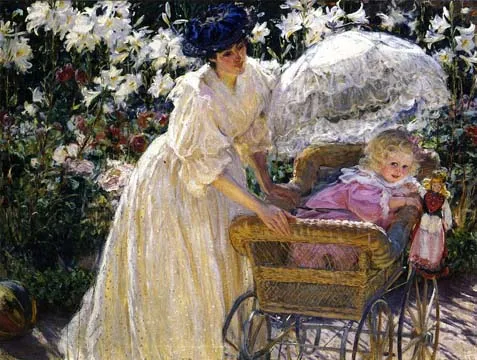
- Lydia Field Emmet (painting, "Garden Days")
- Caroline A. Houston (2 miniatures, "Portrait of Miss C." and "Portrait of M.J.C.)
- Mary Fairchild MacMonnies (painting, "Lilies and Roses")
- Willie Betty Newman (painting, "Reverie")
- Elizabeth Nourse (painting, "In the Church at Volendam, Holland")
- Virginia Reynolds (3 miniatures, each entitled "Portrait")
- Janet Scudder (sculpture, "Decorative Panel for Music Room")
- Harriette R. Strafer (miniature, "Portrait of Mrs. S")
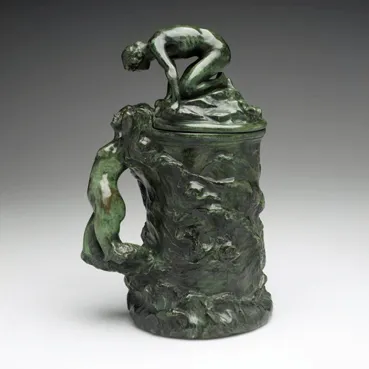
- Enid Yandell (sculpture, "Mermaid and Fisher Boy" pewter tankard)
1901
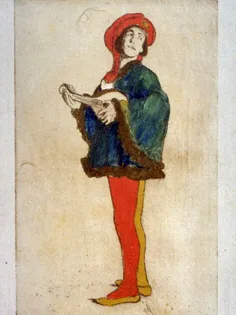
The annual AWAA exhibition was held at 4 rue de Chevreuse from March 2 to March 9, 1901. The association president for the year was Mary Fairchild MacMonnies and the vice president was Elisabeth Kruseman Van Elten. In January 1901, the AWAA hosted a competition open to all American women in Paris. California artist Marion Holden designed the winning "Die" for the Association.
1902
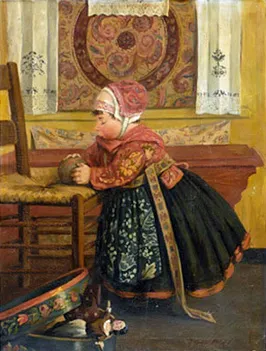
Mary Fairchild MacMonnies, painter and president of the AWAA, coordinated the annual exhibition, which opened on February 15, 1902. The judges were H.S. Bisbing (painter and engraver), S. Seymour Thomas (also a painter and engraver), and Henry Ossawa Tanner (renowned African American artist in 19th-century Paris). The show included 200 paintings as well as pastel drawings, watercolors, and miniatures, all by American women artists.
Among those who exhibited were:
- Inez Eleanor Bate, (3 works, one view of Venice and another of the front door of a fruit shop)
- Della Garretson
- Elizabeth Kruseman Van Elten-Duprez (painting of a family of peasants)
- Sisters Kathleen Greatorex (portrait of a young man and some landscapes) and Eleanor Greatorex (girl reclining in green cushions and snowy town of Moret)
- Meta Vaux Warrick Fuller (a "Rodinesque" sculpture)
- Blanche Dillaye (watercolor meadow at twilight)
- May Audobon Post (three little Dutch girls)
- Mary Fairchild MacMonnies (two paintings of a terraced garden with views of villas of Giverny)
- Elizabeth Nourse (peasant woman holding infant playing with gem)
- Mary Smyth Perkins (3 studies of Luxembourg Gardens)
- Bertha Mary Waters (petite blanchisseuse standing in front of flowing linen)
- Charlotte Van Buskirk (evening effect in a village)
- Alice Rumph (ballet girl tying a slipper)
- Lucy Lee Robbins
- Rebecca Jones
- Miss McArthur [possibly Betty McArthur]
- Eliza Voorhis Haigh
- Louise Wood
- Lena Qualley
- Miss Churchill [possibly Marion Estelle Churchill Raulston]
- Miss Ella Thomas
- Mabel Packard
- Mrs. May G. Hart ("interesting" village scenes)
The exhibition details were published on February 16, 1902 in The Chicago Tribune (10).
1903
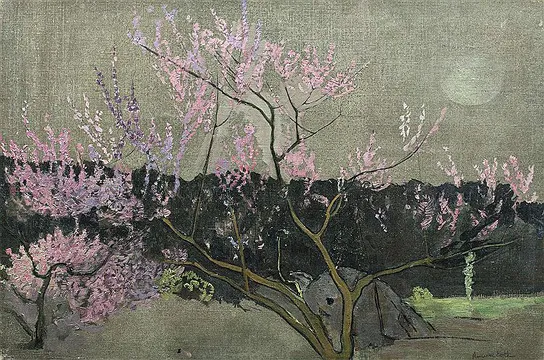
A brief mention of the annual exhibition was printed in The Baltimore Sun on February 22, 1903 (5). Sculptor Frederick MacMonnies was erroneously listed as the AWAA president for the year; in fact, his wife, Mary Fairchild MacMonnies, was serving as president for the third year in a row. Some of the artists who exhibited were:
Gil Blas also covered the exhibition in a February 23, 1903 article. The only artist acknowledged for her work was "Mlle Pliffer," a misspelling of the name Clara Marie Pfeifer, a St. Louis-born sculptor who studied with Mercié and Bourdelle.
1904

American painters Walter Gay, John Humphreys Johnston, and Edward Simmons formed the jury that selected 93 works (88 paintings, five sculptures) for the annual exhibition.
A review was published in The New York Times on March 6, 1904: "This year's exhibition was opened a couple of days ago in the Rue de Chevreuse, and is generally admitted to be an improvement on its predecessors. It contains, of course, examples of that pathetic striving after the unattainable which has ended in irremediable failure, but so do most picture galleries" (4).
Mercifully, the reviewer does not name those artists whose work he considers pathetic, but he does praise:
- Mrs. MacMonnies, ("The Doll's Tea Party," a painting of her two children on the terrace of the family's home in Giverny)
- Miss [Caroline Minturn] Hall, secretary of the AWAA ("The Pines on a Hill")
- Mrs. [Katherine Arthur] Behanna ("Trois tetes de vieillards" and "L'Avare")
- Elizabeth Nourse, (painting of a deserted church in Brittany, drawing: "La petite soeur")
- Miss Van Helten [incorrect spelling for Elisabeth Kruseman Van Elten], vice president of the AWAA (painting: "Un petit déjeuner au jardin" and aquarelle: "Two Is Company")
- Anna Hope Hudson ("Scene in New Jersey")
- Mrs [Sarah Center Whitney] Robinson (sculpture)
- Mrs [Mabel] Conkling (sculpture)
- [Ella] Hergesheimer (miniature)
- Harriet Sophia Phillips
- Marion Powers
Victor Ducieu published a highly detailed French review of the two-week AWAA show in L'Art (147-149). He not only listed many of the artists but also the titles of their works on display.
- Frances Quarle Thomason (3 works, "Luxembourg Gardens," "Out-Door Cafe," "Along the Quai")
- Alice Schille (aquarelle: "Yanneke," sketch: "Her children")
- Minerva J. Chapman ("Otay Mt. S. California")
- Helen Kibbey ("Study of a Child's Head")
- Alice Blair Ring (painting of a young girl climbing a tree)
- [Mary] Estelle Dickson ("Jeune femme aux fleurs")
- Alice H. Barri ("Trijn")
- Jean A. Robinson ("Vue des toits," "Interieur d'eglise," "Study- young woman")
- Emilie Zeckwer ("Afternoon Tea at the American Girls Club," "The Capucine," "Memories of Italy")
- Alida Ghirardelli ("Interieur")
- Alice Murphy (Dutch-like painting of young woman with fruits and carrots)
- Althea Chase ("Mexican Pottery")
- Maria Daviess ("Etude de modele" and "Early Morning in the Luxembourg")
- Alma Hirsig (miniatures)
- Adele Winckler (miniatures)
- Anna Watson (miniatures)
- Anita W. Sargent ("Soleil couchant a Barbizon")
- Caroline S. Yardley ("Etude de portrait")
- Anna Lynch ("Jeune fille au chapeau rouge" - miniature)
- Madame May G. Hart ("Windy Day")
1905
The New York Times reported on the exhibition opening in "Paintings by American Women" (7). Many of the works on display were landscapes. Notable exhibitors were:
- Miss Fergueson [probably Nancy Maybin Ferguson]
- Miss Kibby [Helen Kibbey]
- Miss Waters Bertha Mary Waters]
- Miss Sargent [Anita W. Sargent]
- Miss Wyman [probably Florence Wyman Ivins]
- Mary Green [Mary Shepard Greene]
- Mrs. [Mary Fairchild] MacMonnies
- Elizabeth Nourse
- Mrs. [Janet] Scudder [note: Scudder never married]
A magazine called The Index also highlighted the AWAA exhibition in 1905 (28), featuring three artists originally from the state of Indiana:
- Helen Goodwin (2 miniatures)
- Frances Goodwin (portrait bust)
- Janet Scudder (fountain)
1906
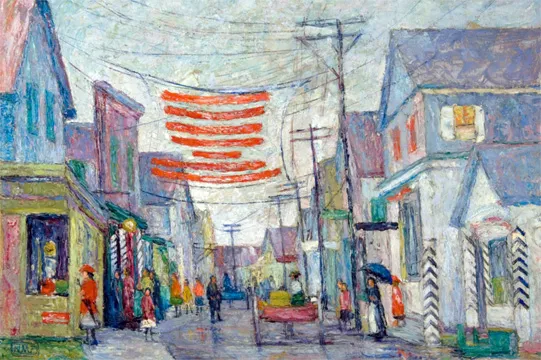
The annual exhibition was described on February 25, 1906 in The Chicago Daily Tribune (B1). Mary Fairchild MacMonnies and Florence Esté were invited to participate. Other artists who submitted their work to the jury and were selected are listed below:
1907
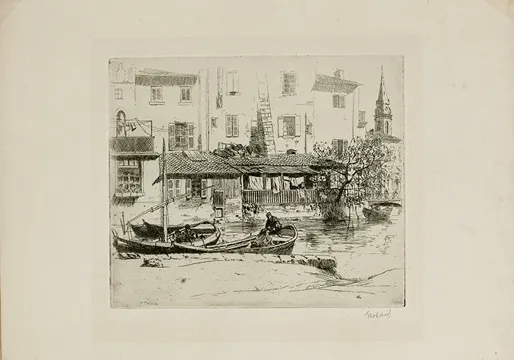
The AWAA exhibition opened at 4 rue de Chevreuse on February 16, 1907. The president for that year was Florence Esté and the vice president was Adairene Vose Congdon. Further details are not extant.
1908
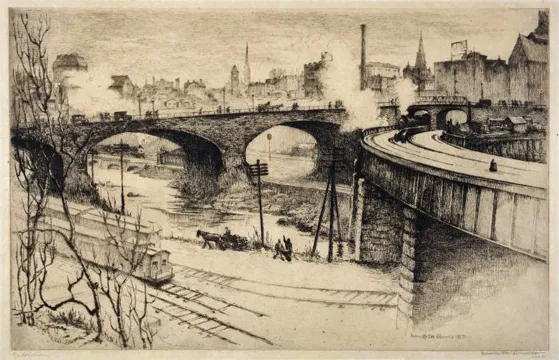
A brief mention of the annual exhibition by Arsène Alexandre appeared in Le Figaro on Feb. 17, 1908. As usual, he lists those artists whom he deems most successful in their efforts:
- Mme. Rice [Anne-Estelle Rice]
- Mme. Cronnan [Marie Cronin]
- Mme. Critcher [Catherine Carter Critcher, AWAA president for 1908]
- Mme. Hunt [Maud Hunt Squire]
- Mme. Nourse [Elizabeth Nourse]
- Mme. Johansen [Myrtle Jean McLane]
- Mme. Richardson [Anna M. Richardson, known for her landscapes]
- Mme. Mars [Ethel Mars, whose engravings are praised by Alexandre]
- Mme. Clements [Gabrielle de Veaux Clements]
The Baltimore Sun also wrote about the exhibition (February 23, 1908, 5), praising artists
1909
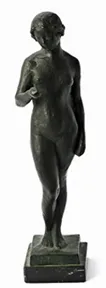
The 1909 exhibition was reviewed in The Advance by Miss Kilbourne Cowles (April 1, 1909, page). Cowles cites two artists from Chicago:
Town & Country noted that the 14th [sic] annual exhibition was held February 14 to March 1, 1909. There were also plans to host a summer salon at the Club for those who wanted to exhibit or sell their work before traveling (17). No artists' names were mentioned and it is unclear if the summer salon ever came to fruition.
1910
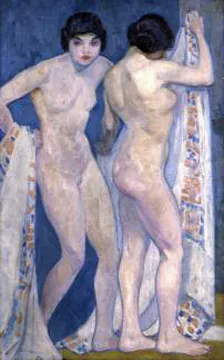
Robert Bacon, American ambassador to France, presided over the 1910 exhibition opening. Judges Walter Gay and two French artists selected one hundred and thirty works by American women. Anne Goldthwaite was president of AWAA for the year, while Maud Squire served as vice president.
Artists featured in the show included:
- Marguerite Thompson ("Lady with Shawl")
- Anne Goldthwaite (an interior and a portrait of Mrs. Clifford Lippman)
- Kathleen McEnery (3 works, "La Seine Vue de la Tour-Eiffel," "Petit Luxembourg," and an untitled canvas)
- Constance Bigelow (portrait sketch of a young woman)
- Cornelia Cowles
- Elizabeth Edmond ("The Dreamer," sculpture)
- Maud Squire (vivid color etchings of Paris, especially interior of Casino at Montmartre, music hall, and "fete foraine")
- Ethel Mars (colored sketch of the entrance to a coal mine and several Paris scenes)
- Amanda P. Austin (painting of "Breton Girl," two sketches: "Market Day at Pone-L'Abbe" and "St. Peter's, Rome," and a portrait bust)
- Grace Mott Johnson (study of "Percheron Horses," sculpture)
- Katherine Kimball (etchings of three ancient pieces of architecture and an old barge)
- Emma Alice Nordell
- Adairene Vose Congdon ("Ramparts of Montreuil-sur-Mer")
- Catherine Watkins ("Beech Trees in Brittany")
- Anne Estelle Rice (3 watercolors, 2 of seaside scenes)
- Mildred Baynon Copeland (3 works, "Portrait of Enid," study of a young woman: "Vanity," and an interior)
- Maude Murray (three exterior scenes near Etel)
- Anna Richardson ("Les dunes a Etaples," "Rainy day at Imptie," and "Etude")
- A. Walker [Jessie A. Walker] (landscape etchings)
- Anna Watson (picture of crooked trees and miniature "Portrait of Mme C.)
- Frances Lea (watercolors of Old World German towns)
- Mrs. A.W. Lea [Anna W. Lea] (miniature)
- Mary Wesselhoeft (watercolors and sketches: figures copied from the west door of Chartres Cathedral and washerwomen of Chartres)
- Amalie Deady (watercolors)
- H. Joan Osborne (miniature portrait of a young man)
- Mary Wyant [incorrect spelling for Mary Lyttleton Wyatt] (miniature portraits of Mrs. Whitelaw Reid and Mme X., and a study of Manon)
- Carrie E. Decker
- Marian Frolich [incorrect spelling for Maren Froelich] ("Robe Chinoise")
- Helen Goodwin (miniatures)
- Nina Rose Hartwell
- Janet Lippman
- Florence Lundborg (3 sketches of Luxembourg Gardens and a decorative panel with a group of cypresses)
- Hulda Parton ("Killarney Roses")
- Carolyn L. Peck
- Marion Tooker (5 sketches, including a few cafe studies and "A Corner of Rouen")
- Grace Uhl ("Study of a Girl")
- Zelda Shanfield (miniatures)
- E. Blackburn [possibly Josephine Eckler Blackburn]
- Nell Coover
- St. Clair Breckons
- Lucille Douglass
- A. L. Sawyer [probably Amy Sawyer]
- W. Walker ("Sunrise on a Misty Morning" and "Bridge at Grey")
- Florence Lucius (portrait bust)
- Lindsey Sterling (portrait bust)
- Myra Thompson (portrait bust)
- Alice M. Ludlum (enameled bowl)
- Belle McMurthy [incorrect spelling for Belle McMurtry] (hand-bound book)
The French press also covered the exhibition, with a small review published in La chronique des arts et de la curiosité on March 5, 1910 (75).
- Alice McClure (incorrectly listed as Alice Clure) is praised for her paintings of two child models (Antoinette and Jeanne), including her use of color and her women's figures.
- Minerva J. Chapman is called out for her miniature of a musician, as are
- Mlle E-D. Pattle (should be Elsie Dodge Pattee), for watercolors and an Oriental miniature,
- Alice Morgan Wright for a clay sculpture of a small group, "Springtime."
1911
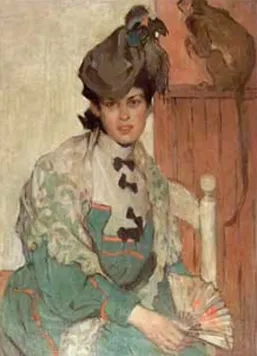
The New York Times review of the exhibition, published on Sunday, February 19, 1911, remarks on the trend toward Impressionism at the well-attended opening: "The newer impressionism runs riot at the annual exhibition of the American Women's Art Association, which opened to-night in the Rue de Chevreuse, with the usual grand reception, attended by the elite of the American colony" (C2). The reviewer also notes the increase in works of sculpture, acknowledging pieces by
- Alice Morgan Wright
- Marion Lassey
- Florence Lucius
- Elizabeth Edmond
Artists mentioned by name were:
- Constance Bigelow Williston (influenced by artist Henri Martin)
- Ethel Mars (“ultra-modern portrait of artist friend, Miss McLure of Buffalo”)
- Maud Hunt Squire (four watercolors of cafe life)
- Adairene Vose Congdon ("A Forest in Brittany")
- Nina Rosabel Hartwell (inspired by Cazin)
- Frances Lea (painting)
- Emily Burling Waite (place of honor at the exhibition for her two portraits)
- Catherine Watkins (street scene in Belgium called "To Vespers")
- Fannie E. Duvall (two landscapes)
- Miss McLure (four neo-Impressionist canvases)
- Miss Burraye [incorrect spelling for Mildred Burrage] ("decorative garden scene flooded with sunlight")
- Florence Minard
- Miss Buell [Mabel Buell] (painting)
- Miss Uhl [Grace Uhl]
- St. Clair Breckons
- Ethel Moore
- Miss Cotton
Other sources indicate that Frances Hodgkins, a New Zealand artist appointed as the first female instructor at Colarossi's, also exhibited in the 1911 show (RH archives).
1912
According to the New York Tribune, the board of the AWAA included: Mrs. Reid (president); Mrs. Myron T. Herrick, wife of the American ambassador to France (vice president); Mrs. Robert Blick; Mrs. Stanford White; Mrs. Edward Tuck; Mrs. Charles Laurence; Mrs. George Munroe; Mrs. Henry Ridgway; Mrs. Hamilton Russell; Mrs. Fitzhugh Whitehouse; and Mrs. Walter Gay (December 15, 1912, 9).
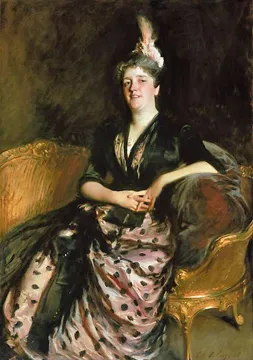
The 1912 exhibition featured 200 loaned works, of which eight were sent by the Luxembourg Museum, including three portraits by John Singer Sargent (one of Mrs. Edward Boit, and another of his friend Jacques Blanche), as well as three watercolors by Whistler. Other major artists including Auguste Rodin had also been invited to exhibit.
The show, curated by George Howland, was favorably reviewed in The New York Times, which documented its popularity in the American colony: "the great success with which it is attended is striking proof of the activity of American students in Paris." (C2). Unlike the AWAA exhibitions of previous years, this show focused entirely on established, successful artists rather than students. Only a few American renowned women were included in this exhibition: Florence Esté, Elizabeth Nourse, and Janet Scudder.
1913
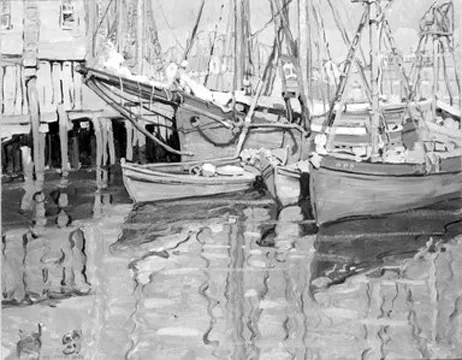
American Art News covered the 1913 exhibition at 4 rue de Chevreuse, which was officially opened by American ambassador to France Myron T. Herrick on December 5 (5).
Winners of the exhibition competition:
- Jane Peterson: Received the 500frs. prize from Elisabeth Mills Reid for her watercolor sketch, "Boats"
- Ada Gilmore: honorable mention for watercolors
- Maud Squire: honorable mention for pastels
- Bertha Houser: honorable mention for for drawings
- Edna Boies Hopkins: honorable mention for woodcuts
- Ethel Poyntell Canby: honorable mention for etchings
- Pamela Vinton-Strunz: honorable mention for miniatures
Three exhibitors did not participate in the competition, designated as "Hors Concours":
- Florence Esté
- Anne Goldthwaite
- Elisabeths [sic!]
Exhibitors of watercolors, etchings, woodcuts:
- Blondelle Malone
- Mrs. H. Amiard Oberteuffer
- Frances Rogers
- Louise Venable
- L. Hazlehurst Vintors [incorrect spelling for Lillian Hazlehurst Vinton]
- Nell Coover
- Mathilde de Cordoba
- Ethel Wars [incorrect spelling for Ethel Mars]
- Margaret Patterson
Exhibitors of miniatures:
- Minerva Chapman
- Bertha Coolidge
- Theodora Larsk
- Katherine McIntire
- Jane Mumford
- Viola Steele
- Mary Lyttleton Wyatt
The review concludes by acknowledging that the exhibition "has reached a high standard of excellence this year." It also notes an upcoming exhibition of oil paintings at the Club in February 1914 and one of sculpture and "objets d'art" in March 1914.
1914
There are unfortunately no details about the AWAA's February 1914 oil painting exhibition. But a solo exhibition in January by Blondelle Malone was covered by L. De Cremone for Le Figaro (6). An article in American Art News states that Malone exhibited more than 100 paintings and watercolors, representing her work over the past 2-3 years: "She has considerable sense of color, and her watercolors are particularly attractive. Among the paintings the snow scenes may be specially mentioned (5).
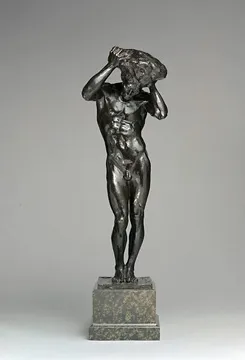
The March sculpture exhibition was mentioned in a New York Times article about the Paris Salons (C3). Fifteen artists were represented in the show with the $100 prize (given by Elisabeth Mills Reid) shared by Gertrude Vanderbilt Whitney (for her two bronzes) and Maud M. Noel (for her two "decorative heads"). Some of the other sculptors were:
- Ada Gilmore
- Alice Morgan Wright
- Grace Hill Turnbull: In her autobiography Chips From My Chisel, Turnbull recalled the sculpture exhibit, in which her piece, Mother and Child, was the focal point: "I am undergoing a brief exposure to the limelight that makes my feeble eyes blink. Ambassador Herrick was asked to make the inaugural speech this afternoon at the Private View, and Matisse honored the occasion with his presence; and though from an excess of something or other I did not attend the vernissage, but worked in my studio instead, I took time off to look at the latter from the gallery - a quiet avuncular gentleman, conventionally dressed, not at all what you would expect from his paintings" (39).
- Mrs. Katherine T. Hobson-Kraus
- Jenny Petria Collin
- Grace Hoerger
Although not directly related to the Club or the AWAA, Blondelle Malone (4 scenes in gardens), Frances Thomason (20 Parisian scenes), and Edith Fry (7 watercolors) participated in a June exhibit hosted by Miss Blanche Stanley in her studio on rue Notre-Dame-des-Champs, with six other artists (American Art News, July 18, 1914).
Salon d'Automne
1903
Bla
1904
Bla
1905
Bla
1906
Bla
1907
Bla
1908
Bla
1909
Bla
1910
Bla
1911
Bla
1912
Bla
1913
Bla
1914
Bla