Maud Hunt Squire (1873 – 1954)
Initial Research by Jacqueline Yu, B.A. in Art History and East Asian Languages and Culture, Columbia University in the City of New York, 2024. Columbia Global Virtual Intern, 2023 – 2024. Significantly expanded and written by Brunhilde Biebuyck.
Maud Hunt Squire and Ethel Mars lived and worked in such close association that secondary sources often conflate their work, misattributing one’s creations to the other. The retrospective exhibition chronicling their joint journey—held at Mary Ryan Gallery in New York from October 12 to November 22, 2000—is aptly titled Très complémentaires: The Art and Lives of Ethel Mars and Maud Hunt Squire—a fitting tribute to their mutual influence, enduring partnership, and shared artistic achievements. In addition Catherine Ryan's exhibition catalogue remains the most comprehensive overview of their contributions to the art world. It offers archival photographs, maps, biographical chronologies, a facsimile essay by Gertrude Stein, and records of their exhibition history, providing invaluable insight into their joint careers and lasting legacy.
Both women were remarkably prolific; the extensive—though likely not exhaustive—exhibition list featuring each of their work attests to their output and the recognition they received for their contributions to the art world in both the U.S. and France: squire; mars
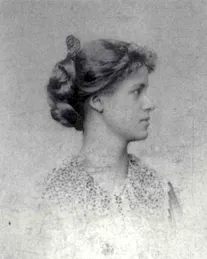
Maud Squire was a painter, printmaker, and illustrator born on January 20, 1873, in Milford, Ohio, to an artist mother and a musician father. Her father, a violinist, later owned a large music store where he sold sheet music and instruments. Squire learned music from her father and drawing from her mother. Her early life was marked by loss: her sister, Ida Isabelle, died when Maud was sixteen, followed by her father's death a year later; her mother died of consumption shortly before Maud graduated from the Art Academy of Cincinnati. She also had a brother, William Horace Squire, who eventually relocated to France and managed their inheritance. Squire had studied Latin, French and German by the age of 20 and was gifted in letters, music, and art by 1894.
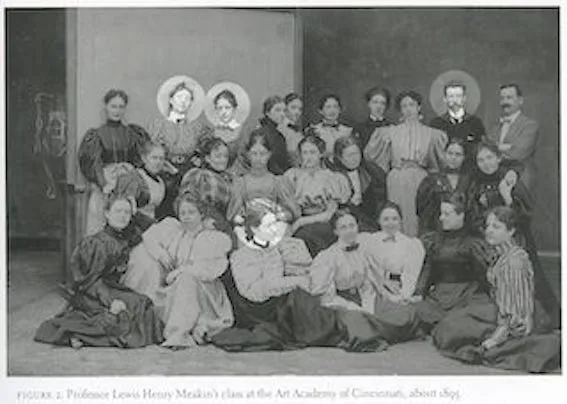
In 1894, she began taking classes at the Art Academy of Cincinnati. She enrolled again in 1895 – 1896 and 1896 – 1897. Her instructors included Frank Duveneck, a prominent American painter and etcher associated with the Munich School, and Lewis Henry Meakin (1850–1917), an English-born American Impressionist landscape painter often described as “one of the best landscape painters in America.” Squire graduated second in her class in 1894 and began gaining recognition early on for her pastels and color intaglio prints. Even while still a student, she worked professionally as a book illustrator, establishing herself as a promising young artist. Mars
At the Academy, Mars and Squire developed a number of influential personal relationships. For example, classmates Edna Boies Hopkins and James Hopkins, who would later marry Edna Boies in 1904, would go on to become their lifelong friends and collaborators.
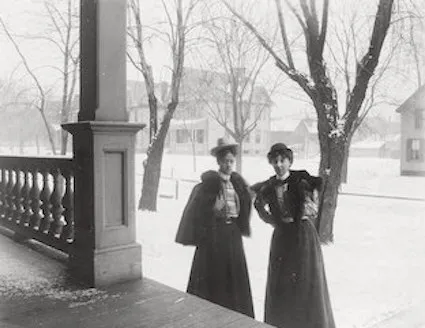
The most consequential relationship would be that between Mars and Squire; from their fateful meeting to Squire’s death in 1954, the two would go on to share both their personal and professional lives, living and working together in the United States and France. Their partnership is often labeled a “Boston marriage,” a term “typically deployed in the late nineteenth and early twentieth centuries to describe relationships between White middle-class women who formed deeply connected partnerships and never married” (Langa 126). The exact nature of Mars and Squire’s relationship remains a subject of scholarly debate, particularly in connection with Gertrude Stein’s famous prose poem, Miss Furr and Miss Skeene: The Tale of Two Young Ladies Who Were Gay Together and of How One Left the Other Behind, for which the pair served as inspiration. Although the narrative does not perfectly align with their lived reality, both Stein and the printmakers acknowledged that Mars and Squire were the real-life counterparts of Furr and Skeene. Written around 1908 but only published in Vanity Fair in 1922, Stein’s poem portrays Furr and Skeene as “living where they were both cultivating their voices and they were gay there,” repeating the word gay like a litany throughout the text. This refrain has attracted considerable scholarly attention for the way it underscores the semantic fluidity of the term at the turn of the century, when it still conveyed a sense of cheerfulness but was beginning to acquire associations with queer identity. Although the poem’s allusion to same-sex relationships went largely unnoticed at the time, it has since become a touchstone in discussions of queer modernism. Yet the extent to which Stein’s portrait reflects the reality of Mars and Squire’s relationship remains contested. Historian Catherine Ryan contends that it is unlikely the two were lesbians, suggesting instead that they shared an evolving, less easily categorized bond. Supporting this view, Dorothy Squire, Maud’s niece, recalled that while Mars took on many lovers over the course of her life, Squire was too absorbed in her work to pursue such attachments (Ryan 6). On the other hand, a number of critics have emphasized the intimacy and longevity of Mars and Squire’s partnership as evidence of a romantic attachment. Their decades of cohabitation, shared artistic practice, and mutual visibility within expatriate circles in Europe suggest more than mere companionship. For these scholars, Stein’s playful but pointed portrayal of Furr and Skeene captures a dimension of their bond that was otherwise left unspoken in contemporary accounts.
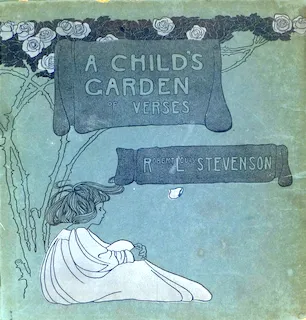
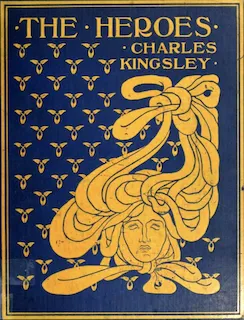
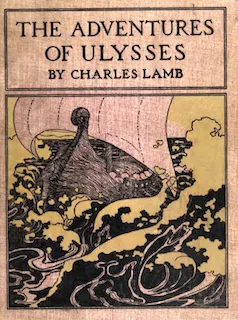
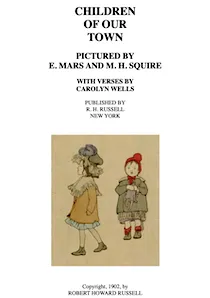
In any case, after graduating from the Art Academy, they spent a short time with Mars’s family in Springfield, Illinois before traveling to Chicago in 1899, when they showed portraits of one another in exhibits at the Cincinnati Art Museum and the Art Institute of Chicago. Around 1900, they moved to New York City, where they worked as book illustrators for the publishing house R.H. Russell—founded in 1890 by author and publisher Robert Howard Russell, the firm quickly became a gathering point for many of the leading authors and book designers of the period, and the illustrations provided by Mars and Squire were always met with critical acclaim.
Both were members of the Society of Western Artists, but whereas Mars began exhibiting with the Society as early as 1898, Squire did not exhibit with them until 1904. Between 1898 and 1906, both exhibited at the Art Institute of Chicago, the Cincinnati Art Museum, and the Pennsylvania Academy of the Fine Arts. The year 1902 marked a turning point in their life, as they departed for Europe, beginning with travels to Chioggia (Italy), then on to Germany, and finally settling for a time in Brittany, France—regions whose scenery and people would soon appear in their artwork. In March 1903, both were honored as former students of the Art Academy of Cincinnati with a special exhibition of 149 drawings for illustration and 83 reproductions held at the Cincinnati Art Museum. From 1904 to 1905, they lived in Cincinnati, then in Illinois, and finally returned to New York City. During this period, Mars sought teaching positions at the Cincinnati Art Academy and other institutions but was unsuccessful.
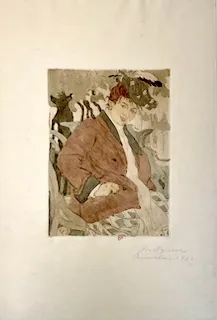
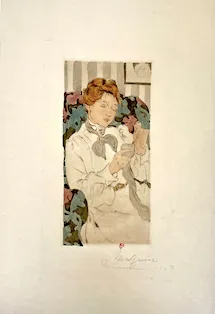
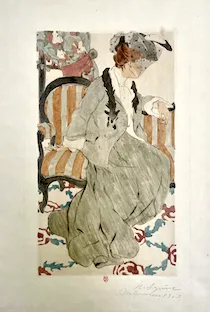
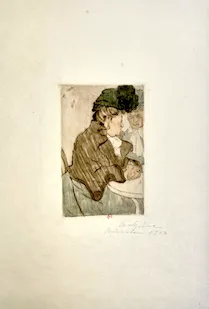
Having already made notable inroads into the U.S. art world, Mars and Squire moved to Paris in April 1906, taking up residence at 39 boulevard Saint-Jacques in the 14th arrondissement, near Denfert-Rochereau, where they would remain until the outbreak of World War I. Fellow artists Edna Boies and James Hopkins also moved to Paris, living further along the same boulevard, at number 51, forming part of a small expatriate artistic circle. Squire’s brother William, who had graduated from Cornell University in Civil Engineering, was already living in Paris with his wife. At this time, Mars and Squire traveled widely across Europe, visiting Pont-Aven, Concarneau, and other parts of Brittany, as well as Spain and Germany.
In Paris, the couple began its formal artistic journey at the 1906 Salon d’Automne, with Mars showing ten engravings and Squire three paintings. They quickly integrated the American expatriate community and embraced the bohemian life of Paris “[…] with a great deal more zest and panache than most of their more conservative colleagues” (Flint). Both were regular attendees of Gertrude Stein’s Saturday salons at 27 rue de Fleurus—a meeting ground for the avant-garde, drawing an extraordinary array of painters, writers, and thinkers, many of whom would later be hailed as defining luminaries of modern art and literature.
In her autobiography, Alice B. Toklas recalled one of Stein’s early literary portraits, a rhythmic incantation that evoked Squire and Mars:
Then there was a fair sprinkling of Americans, Mildred Aldrich would bring a group or Sayen, the electrician, or some painter and occasionally an architectural student would accidentally get there, and then there were the habitués, among them Miss Mars and Miss Squires [sic] whom Gertrude Stein afterwards immortalised in her story of Miss Furr and Miss Skeene. On that first night Miss Mars and I talked of a subject then entirely new, how to make up your face. She was interested in types; she knew that there were femme decorative, femme d'intérieur, and femme intrigante. There was no doubt that Fernande [Picasso] was a femme decorative, but what was Madame Matisse? Femme d'intérieur, I said, and she was very pleased (Stein).
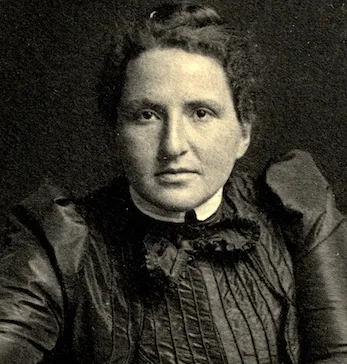
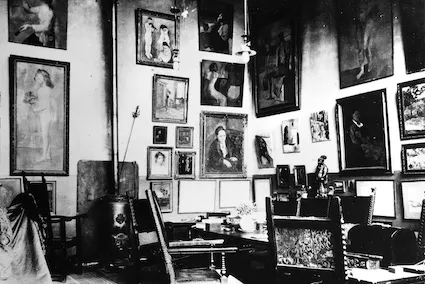
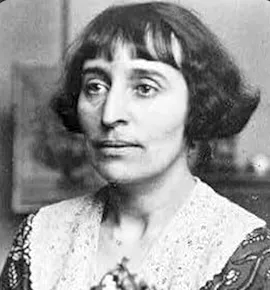
Decades after their Paris years, in 1933, Squire wrote an affectionate letter to Stein and Toklas, recalling the rue de Fleurus gatherings and Stein’s literary portrait of her in Miss Furr and Miss Skeene, while playfully echoing the author’s distinctive rhythm and phrasing:
Dear Gertrude Stein and Alice B. Toklas,
I want to tell you how much we enjoyed your book. It was very delightful and took us back to those most interesting evenings in the rue de Fleurus, in fact it was just like living them over again… The last time we were up there was during the colonial exhibition and we called around to see you, but the concierge said you were then out in the country. We were there only a few days – we can’t stay away very long from our Siamese cat Wow and his mistress Min – he brought her home one day, a little gray colorless thing with a long red tail, but a sweet disposition – and from our three Canary birds.
If ever you come down this way, do come and see us . We think Vence a beautiful place, and we have a villa here. I don’t believe you liked Vence much – I believe you said it gave the impression of always walking uphill – but we like the scenery & being near Nice & the shore – which is gay & sophisticated. You see Miss Furr still likes gay things & being gay & wanting everybody & everything else to be gay.
With lots of love to you both—Miss Furr and Miss Skeene (cited in Gallup, 268-269).
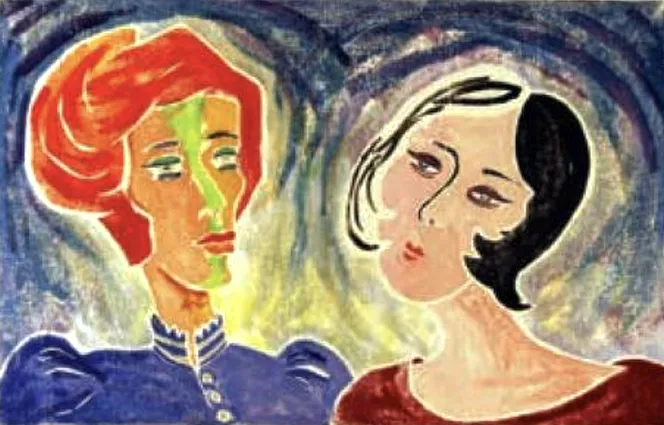
Adapting to their new environment, Mars and Squire began to shed their former selves—Midwestern, prim, and conventionally dressed—and embraced a more eccentric style of self-presentation, embodying the bohemian ethos with flair and transforming themselves into visual statements of modernity. Their appearance and demeanor were so striking that contemporaries compared them to figures from Toulouse-Lautrec’s artworks. Within a year of moving to Paris, they had fully embraced the avant-garde, bohemian lifestyle. Art critic James Mellow described their transformation in a 1973 article, although in a tone that was rather derisive:
[...] two minor painters who frequented the rue de Fleurus… two Midwesterners with cultural ambitions—they both dabbled in watercolors—who had arrived in Paris, early in the century, somewhat mousy, tailored and prim. Within a year they were habitués of the local cafes, Miss Mars had dyed her hair flaming orange, and both appeared in public so heavily made up their faces had the appearance of masks (cited in Stone 29).
As we have already seen, they were not “minor painters” who merely “dabbled in watercolors,” but young, committed artists who were already recognized for the quality of their work, earning the attention of critics and exhibiting in respected venues. Despite the fact that they were living embodiments of the avant-garde world they lived in, Mars and Squire regularly frequented the American Girls’ Art Club, established as a supposed refuge from the bohemian lifestyle that dominated Montparnasse. Their bold presence was noted by Club resident Anne Goldthwaite, who later described them as ‘nice Midwestern girls in tight, plain gray tailor-made suits, with a certain primness’—a contrast so striking that she scarcely recognized them six months later:
Miss Mars had acquired flaming orange hair and both were powdered and rouged with black around the eyes until you could scarcely tell whether you looked at a face or a mask. The ensemble turned out to be very handsome, and their conversation, in public that is, became bloodcurdling. I went with them to the cafe where they pre-empted seats in the best corner, never drank but one cafe creme for eight sous and gave two sous pourboire. They paid their debts and in private led exemplary lives. I hope they will never read this last statement, as they would think I was offering them an insult — breaking down the legend they had laboriously built up! (cited in Kingsley, 69).
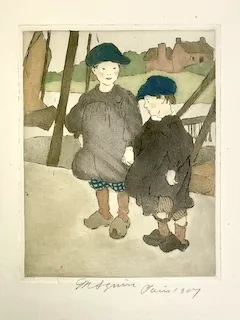
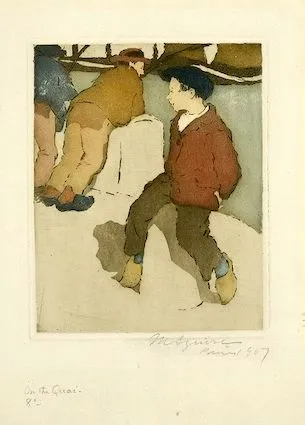
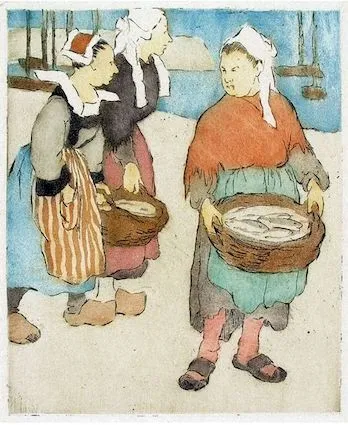
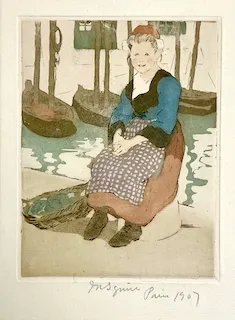
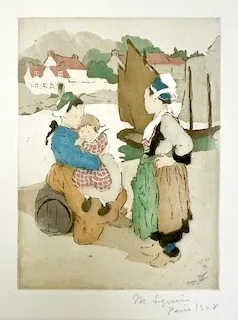
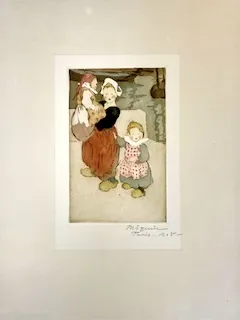
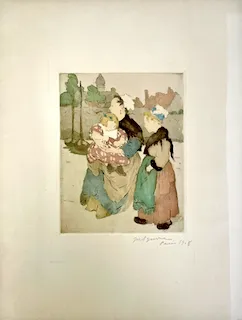
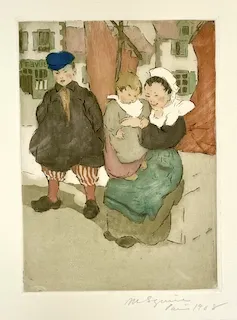
Between 1907 and 1914, both exhibited regularly with the American Woman’s Art Association at the American Girls’ Art Club and established themselves as influential figures, shaping the work of many young artists who exhibited or lived at the Club—including Margaret Patterson, Ada Gilmore, Mildred McMillen, Edna Boies-Hopkins, and even Blanche Lazzell and Juliette Nichols—several of whom would become close friends and collaborators. Mars and Squire appear to have learned the art of etching through Edna Boies Hopkins who introduced them to the medium after her visit to Japan, where studied with some of the masters of Ukiyo-e woodblock print (Kingsley, 70):
[...] Edna Boies Hopkins, became the link between Dow and the artists who settled in Provincetown fifteen years later. Fired with enthusiasm for the woodcut medium, she perfected her method in Japan and then went on to Paris. There she passed on her knowledge to two former Cincinnati Art Academy students, Maud Hunt Squire and Ethel Mars; Mars in turn taught woodcut technique to the artists Margaret Patterson, Ada Gilmore and Mildred McMillen (Berman, 203).
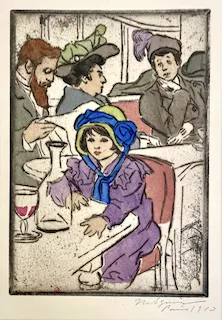
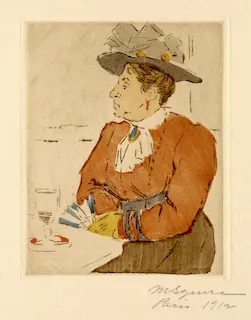
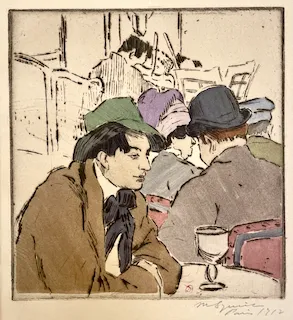
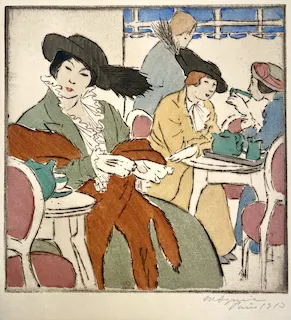
Beyond their connections within the American expatriate community, Mars and Squire became firmly embedded in the French art world, contributing regularly to its exhibitions. The Base Salon—originally compiled by the Musée d’Orsay and now maintained by the Institut National d’Histoire de l’Art—records that they made their debut at the Salon d’Automne in 1906 and regularly exhibited there and at the Salon de la Société des Beaux-Arts until the outbreak of war in 1914. The 1912 Salon d’Automne marked a significant milestone for both women—Mars served on the engraving jury and their works attracted the attention of designer and collector Jacques Doucet, who began buying several of their pieces, which are now housed at the archives of the Institut national d'histoire de l'art (INHA).
At each of these salons, Squire exhibited at least two works, and on one occasion as many as sixteen. Both Mars and Squire eventually held the status of sociétaire at each, a distinction conferred through peer evaluation as formal recognition of artistic merit. Beyond these official exhibitions, they were also a familiar presence at the Galerie Georges Petit and other prominent Parisian galleries.
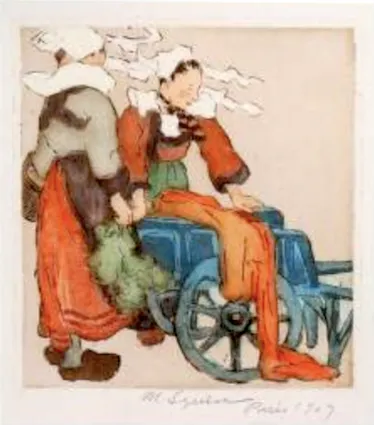
Although they were firmly rooted in the Parisian artworld, Mars and Squire also maintained an active transatlantic presence, sending works to major exhibitions on the east coast and in the midwest of the United States. Their submissions included the Exhibition of American Art at the Cincinnati Art Museum; the Annual Philadelphia Water Color Exhibition at the Pennsylvania Academy of the Fine Arts; the Annual Exhibition of Water-Colors, Pastels and Miniatures by American Artists at the Art Institute of Chicago; the Annual Exhibition of the New York Water Color Club at the American Fine Arts Building; the Annual Exhibition of the Society of Western Artists; and the Chicago Society of Etchers at the Art Institute of Chicago. In 1913, Squire’s achievements were recognized with the “Fine Arts Building Prize” from the Society of Etchers, as noted in the 1914 Nineteenth Annual Exhibition of the Society of Western Artists at the City Art Museum of St. Louis (p. 10). They were also committed members of the Chicago Society of Etchers, further cementing their professional standing. Most of the time, they arranged for their works to be sent either from abroad or from within the United States; some catalogues list a U.S. address, while others give her Paris residence. While Squire is reported to have crossed the Atlantic multiple times between 1906 and 1914, records suggest that Mars did not return to the United States before 1914 (Haverstock, 254).
While there is little information on their personal life and daily activities in Paris, a reporter for the Philadelphia Inquirer, recalled that she had met them in 1908 at Lavenue. Founded in 1854, the Maison Lavenue, also known as the Hôtel de France et de Bretagne, was located at 1–3 rue du Départ and 68 boulevard du Montparnasse and opened directly onto the Place de Rennes, next to the former Gare de l’Ouest:
I met them I think in 1908 when they were habitués of Lavenue, like the rest of us, when Lavenue was the most frequented café on the Rive Gauche [...] In those pre-war days, from 1905 to 1914, we used to spend our evenings over a coffee at Lavenue, and lingered for hours over our eight-cent drink, listening to the excellent music provided by a small orchestra, of which the star violinist was one Schumacher, who, they said, was killed in the war [...]. Mars and Squire were two of Lavenue’s most faithful adherents. They used to take their sketchbook and sitting quietly, well back against the mirrors, work away until a late hour, when they could be seen wend their way back to their studio in the rue Saint-Jacques. They were both extremely talented. They made colored wood-block prints when that process was a novelty (December 17, 1933, 56).
Renovated in 1897, Lavenue was patronized by numerous artists and offered a variety of spaces for clients of varying means, including such figures as: Auguste Rodin, Paul-Alfred Colin, Jean-Paul Laurens, Léon Bonnat, John Singer Sargent, Thomas Alexander Harrison, Augustus Saint-Gaudens, and Frederick William MacMonnies. Whether Mars and Squire met any of these artists remains a mystery.
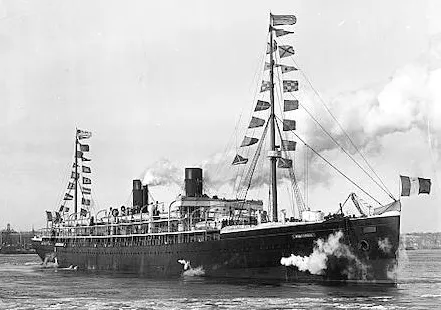
In the summer of 1914, Mars and Squire spent several months in the coastal town of Étaples-sur-Mer in the Pas-de-Calais, then home to a well-established and cosmopolitan artists’ colony (Herald and Review Jun 23, 1915, 3). Since the late nineteenth century, Étaples had drawn painters from across Europe, North America, and Australia, attracted by its dramatic skies, fishing port, and the surrounding dunes and estuaries. By the time Mars and Squire arrived, the colony included a mix of plein-air painters, marine specialists, and artists devoted to rural genre scenes. Among the many Americans on site were several women from the Girls’ Art Club—Alice Schille, Minerva Chapman, Elizabeth R. Scott, Mildred McMillen, and Ada Gilmore—as well as Mr. and Mrs. Sterber of the Art Institute of Chicago. As was the case of many other artists, their stay was cut short by the escalating crisis in Europe, and in September 1914 they departed from Le Havre for the United States:
La Touraine arrived on Sunday last with a number of artists, well known in Paris, most of whom had witnessed the aerial battle above Paris, and some of whom had heard the cannonade of Sept. 2. Among them were Miss Crosnin, Miss Shonard, Ethel Mars, Maud Squires, Mrs. Wentworth, Estol Wilson, Mr. Makall, William Sartain and Frederick Weber. None of them had been able to bring much of their work along. On board "La Touraine" they were happy to find Rev. Isaac Van Winkle, founder of St. Luke's Reading Room, Paris, and Mrs. Van Winkle, who for the last eighteen years have done so much for the students of the Latin Quarter (Weber, 6).
Where they went upon their arrival remains uncertain, but they both exhibited in the Twenty-fifth Annual Exhibition of the New York Watercolor Club at the American Fine Arts Building in November 1914 where they were listed at 648 Madison Ave. It seems they then relocated to Illinois since a local newspaper lists their address at the residence of Mars’s parents at 629 West Prairie Avenue in Decatur, Illinois (Herald and Review, June 23, 1915, 3). In any event, Squire exhibited at the 1915 Panama-Pacific International Exposition at the Palace of the Fine Arts in San Francisco, where an impressive twenty-one of her works were displayed between February and December of that year. Edna Boies-Hopkins and Mildred McMillen, among others, were also represented.
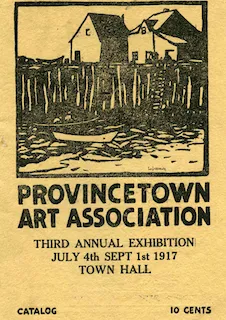
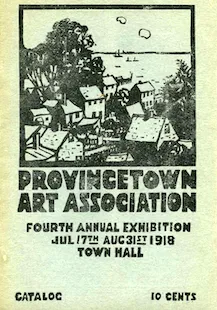
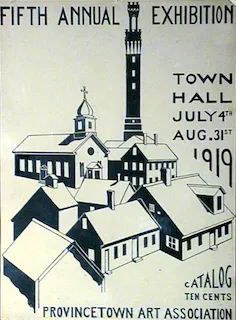
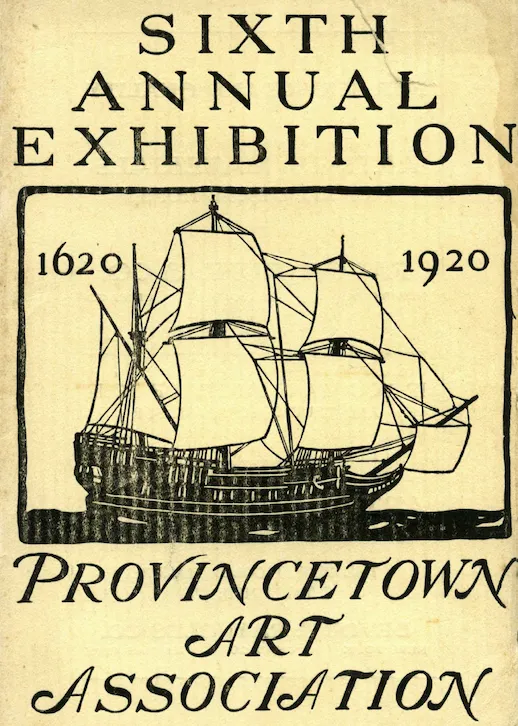
The couple then moved to the artistic coastal town of Provincetown, Massachusetts, in late June 1915, taking up residence at 188 Bradford Street. An article in the Philadelphia Inquirer provides a bit more insight into the context:
Ms. Mars and her friend Miss Squire came back from many years residence in Paris in 1914 and finding Provincetown more congenial than New York settled there in the studio apartment overlooking the sea, built out on piers; in fact, over the harbor. A more stimulating location for artists could scarcely be imagined—a back Piazza overlooks the large harbor dotted with every sort of deep sea-going craft. The Portuguese fisherman, with their swarthy, Latin faces, make an intensely picturesque population, while on Saturday nights, the arrival, and unloading of the mackerel boats at the Long Wharf is a sight never to be forgotten. The fisherman in long rubber boots stand hip deep in the shimmering iridescent fish, passing them rapidly to the barrels, whence they are conveyed to the cold storage plant in Provincetown. All this work is done at night in the glare of torches and makes a picture that no artist as yet has approached (September 9, 1917, 28).
At the time, the town was home to Portuguese fishermen and a thriving artists’ colony that had emerged from Charles W. Hawthorne’s Cape Cod School of Art, founded in the summer of 1899. In a 1988 article for Cape Cod Antiquities and Arts, William H. Evaul captured the appeal: “Rent was cheap. Food was plentiful from the still-burgeoning fishing fleet and the many local farms. And the community was receptive to artists—or, at the very least, tolerant of them” (89). Often dubbed “Greenwich Village-by-the-Sea” or, more playfully, “spaghetti with clam sauce,” it was said to attract “[…] anarchists, socialists, Freudians, feminists, and free lovers, drawn together by common impulses […]” (cited in Busa, 42). According to Christine McCarthy, Chief Executive Officer of the Provincetown Art Association and Museum, the colony grew substantially with the outbreak of World War I in Europe:
In 1915 nearly ninety students were experiencing plein air painting at the Cape Cod School of Art, and by the following year more than three hundred artists were working and experimenting within the operating art schools. Concurrently, poets, actors, playwrights, journalists, and novelists were gracing Provincetown with their Bohemian lifestyle and the Provincetown Players began the Theater on the Wharf at Mary Heaton Vorse's fish-house wharf property (fig. 20). [...] The first six annual exhibitions organized by the Provincetown Art Association were held at Town Hall and membership was growing at a rapid clip. In summer 1916 Provincetown had seen an increase in artists because the war in Europe had forbidden Americans to travel overseas. [..] (Traditional Fine Arts Organization).
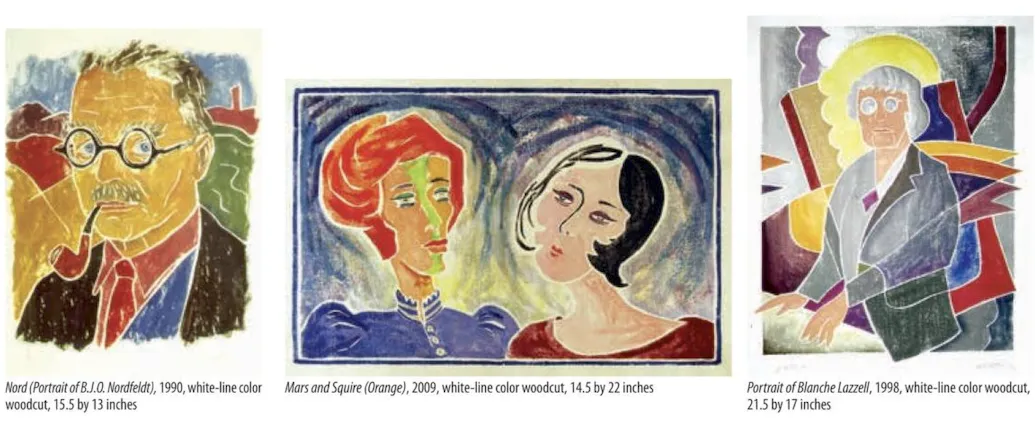
In 1915, McMillen and Gilmore also settled in Provincetown, joined by B.J.O. Nordfeldt and Juliette Nichols, both recently returned from France. Ada Gilmore later reminisced about that fateful summer:
The six artists decided to do nothing but wood-block prints for that season and a very interesting community art life began. Until then few painters had remained in Provincetown through the winter. They all worked steadily that first season and a great many good prints were produced. Each artist’s work developed individually, except as a group they expressed a new modern note in design and color (cited in Gilmore, 5).
The group played a key role in the formation of the Provincetown Printers—one of the most influential printmaking collectives of the early 20th century in the United States. The original core group included Ada Gilmore, Mildred McMillen, Ethel Mars, and Maud Squire—all of whom had studied in Paris and exhibited with the American Woman’s Art Association at the Girls’ Art Club. They were soon joined by Juliette Nichols, Edna Boies Hopkins, and Blanche Lazzell, who had also exhibited at the Girls’ Art Club, along with Nordfeldt, who contributed an innovative technique to the group’s white-line woodcut method:
[...] one day he surprised the others by exhibiting one block, with his complete design on that, instead of parts of it being cut on five or six blocks. He had left a groove in the wood to separate each color, and, in printing, this left a white line which emphasized the design. With his invention he had produced a more beautiful picture [...] (Gilmore cited in Kingsley, 71).
By 1918, the signature white outlines left by the colorless incisions came to dominate the visual language of the so-called Provincetown Printers.
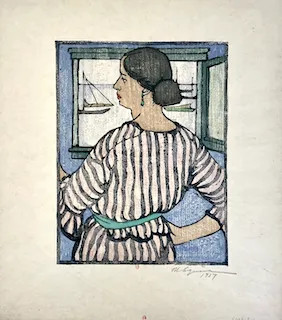
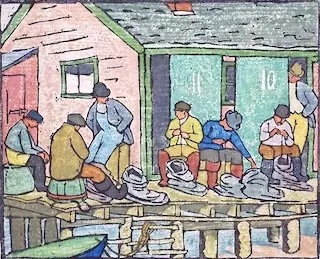
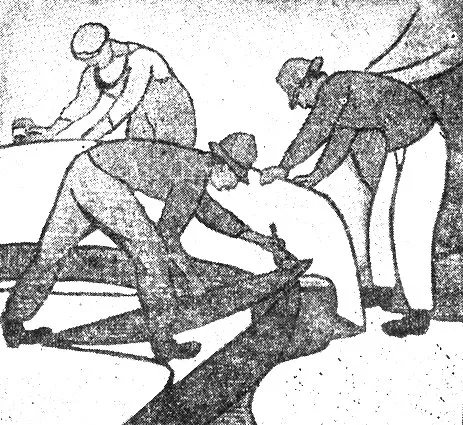
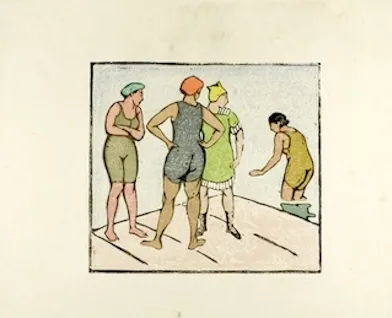
Both Mars and Squire became deeply involved in the Provincetown art scene, conducting woodblock printing workshops and regularly exhibiting with the newly formed Provincetown Art Association, established in 1914. The association began organizing juried exhibitions in the summer of 1915, initially hosting two shows each year—one in July and another in August. By 1918, however, this format shifted to a single annual exhibition, typically held between July and September 1. While Mars exhibited at both the July and August sessions of the First Annual Exhibition of the Provincetown Art Association in 1915, Squire is not mentioned in either catalogue. Both did, however, show their work in the Association's exhibits from 1916 to 1920.
At the same time, their artistic reputation continued to grow on a national scale, with their work featured in exhibitions well beyond Provincetown, including at the Art Institute of Chicago, the Pennsylvania Academy of the Fine Arts, the Cincinnati Art Museum, the Boston Art Club, and the Detroit Institute of Arts—whose exhibition circulated across several Midwestern cities. Squire also continued to illustrate children’s books, several of which were published during this period. Mars, for her part, began experimenting with arts and crafts, creating burlap bags, belts, and rugs from materials she dyed herself, which she then presented in applied arts exhibitions.
Rather than stay in the U.S., Mars and Squire planned their return to France. At the time of their passport application in August 1920, they lived at 37 Commercial Street in Provincetown. Their departure coincided with the establishment of a new exhibition venue for the Art Association:
By 1921 Provincetown Town Hall was no longer available as an exhibition venue for the Provincetown Art Association's artist members. The Provincetown Art Association's board of trustees voted to turn the Bangs/Commercial Street property that they had purchased in 1918 into a "museum." The Provincetown Art Association was officially incorporated (www.tfaoi.org/aa/9aa/9aa613.htm).
The couple returned to France in October 1920 but were unable to find a suitable studio in Paris and left for the south at the end of December. After several months of travel, they returned to Paris in early June 1921. That summer they settled at 34 rue St. Louis in Vernon, near Giverny. Some sources suggest they stayed only for the summer, while others claim they remained for nearly four years. While the town’s proximity to Giverny made it a natural magnet for American expatriate artists and writers, there is no evidence that Squire and Mars had any connection with the artists’ colony there. A letter from Edna Boies Hopkins offers some insight into why they chose this location:
Shem [Maud] and Ethel have found and gone to a charming place in Vernon – about and [sic] hour and a half from Paris. Just by accident and when they were about to give up finding any place that would even do, they discovered this house and garden, such a garden! I spent two days with them a week ago and sent back immediately ecstatic phrases on p.c.’s that caused Jamus [James] and three friends to hop up on the early morning train to see. They were as charmed as I and it would not surprise me to find us living there in a house and garden of our own by long lease if not really ours […] loving care sings out to you from every trained tree, and such a view as there is from the windows, like parts of Italy I remember, and nightingales that do not limit themselves to night (cited in Vasseur, p. 38).
In 1924, both Mars (who listed her address as Vernon) and Squire applied for a one-year passport permitting travel to Italy, the British Isles, Switzerland, Belgium, Holland, Spain, Egypt, Germany, Austria, and Hungary. Whether they visited all of these destinations remains uncertain, but it is known that they lived in Wiesbaden, Germany, sometime between 1922 and 1923, and for the next two years divided their time between France and Germany.
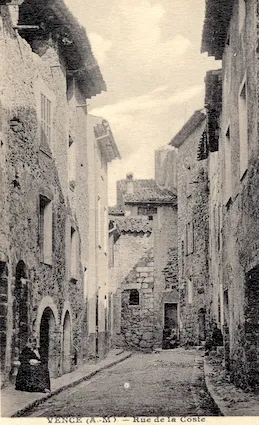
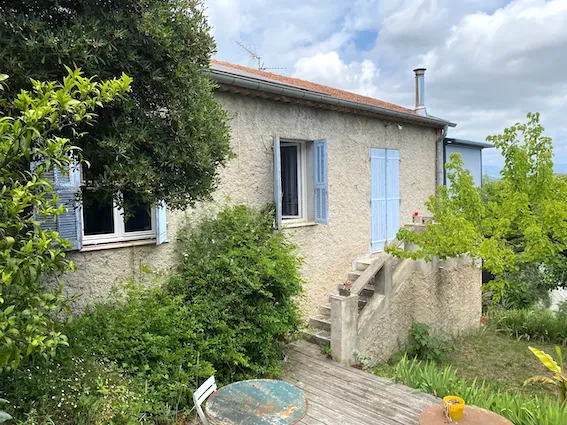
It seems that Mars and Squire finally settled in Vence in early 1925; on April 22, 1925 they both requested a passport extension from the American Consulate in Nice, listing their foreign address as Vence, Alpes Maritimes. Initially residing at the Villa Cyrnea (?) apartment house (Philadelphia Inquirer, December 17, 1933, 56), they became increasingly active in the town’s informal yet thriving artists’ colony, which, over the course of the 1920s, included such artists as Paul Signac, Raoul Dufy, Chaïm Soutine, Henri Matisse, Pablo Picasso, Marc Chagall, Jacques Prévert, Léon Weissberg (Polish-French painter), Georges Papazoff (Bulgarian-French painter and early surrealist), Jean Paul Brusset (French painter); Maurice Mendjizky (Polish-born French painter) and Lucien Jacques (French painter, poet, engraver, and editor). Oliver Chaffee, Ada Gilmore, Edna Boies-Hopkins, Joseph Bolegard, George Herbert Macrum, Frank H. Marvin (half-brother of Mary Heaton Vorse known as Marvin), and other American artists also joined the community for certain periods of time.
A reporter from the Philadelphia Inquirer who had come to Vence to interview Mars and Squire in May 1927, commented on the convivial atmosphere in the town’s artist community:
Any day just before luncheon you may find the artist colony of Vence seated before the café de La Régence. It has a fine, wide terrace and stands upon the Square, which is in the center of Vence before the Nouvel Hotel. About teatime again the tables fill up and indeed so pleased was the proprietor with the patronage of the artists that he recently gave a dinner to which they were all invited. Thus there is something going on in Vence, and the fact that there is a place to congregate makes it a success (May 8, 1927, 44).
The reporter also visited Mars and Squire’s Vence apartment, where she described a home filled with canary birds that had just hatched delicate fledglings. She also remarked that it was both surprising and touching to watch the two women—usually strong-minded and unsentimental—tenderly feeding the young with soaked bread and milk, shielding them from the wind and sun. More importantly, she also offered rare insight into Mars’s rug-making.:
They are her own conception of the hook-rug of our ancestors. She does them in wool upon canvas, having graduated from the dyed rag stage of the art. Her fine color sense makes them objects a very great beauty, while her sense of drawing and her sense of fun, make them pictorially to be desired. There are several in which the motif is love. In an oval—the corners filled out with conventionalized fruit and flower forms—are a man and a maid walking together. She looks down at a nose, gay in her hand while he looks, of course, at her. They are dressed quaintly in a style which seems to suggest the epoch of hook rugs. These rugs are quite different from those admirable carpets made by Mary Perkins at Lumberville, along the Delaware [...] Mars are more decorative, more conventionalized. There is no question of superiority, they are simply very different (May 8, 1927, 44).
While the pair had established their life in France, they maintained a transatlantic presence through their American friends and through exhibitions in the United States. In Paris, they continued to exhibit at the Salon d’Automne, the Galerie Georges Petit, and with the Société de la Gravure sur Bois Originale. Both were invited to serve on the Salon d’Automne jury, prompting their return to Paris in June 1927, where they kept a studio in the Villa Gabriel on rue Falguière in the 15th arrondissement (New York Herald, November 4, 1927, 6). At the same time, Mars also showed work at the Galerie Carmine on rue de Seine. According to the New York Herald, their studio soon became a 'Left Bank mecca' (December 3, 1927, 9).
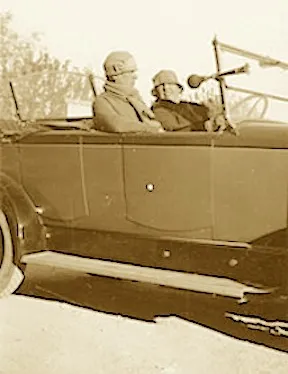
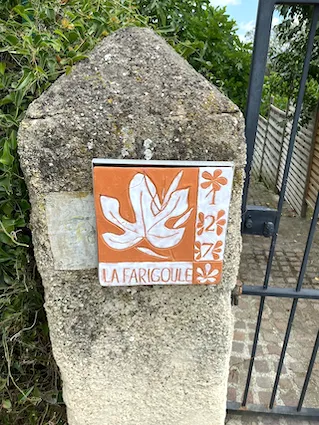
Mars and Squire returned to Vence in December 1927 and, around the following year, purchased a car—affectionately named “Gaston.” Their letters and memoirs recall how the car allowed them to drive from Vence to Paris in two or three days, pausing for leisurely stops along the way. That same year, they acquired two adjoining plots of land in Vence, where they built their home, La Farigoule, between 1929 and 1930. In Occitan, the name refers to a place where thyme thrives; it is also the name of a traditional Provençal thyme liqueur, distilled from wild thyme and long valued as a natural antiseptic, especially for respiratory ailments. The same reporter who had visited them in 1927, offered the following description of their home, which merits quoting in full:
The villa stands down on the hillside and overlooks the most glorious view towards the baou [a term mainly used in the South of France to refer to a cliff or escarpment that often has a flat summit] Saint-Jeannet and Saint-Jeannet itself, and La Gaude, while beyond on fine days may be seen the snow-clad peaks of the Italian Alps. It is a lovely place, with olive trees and a garden full of flowers. You wander down the hill and then mount a flight of stone steps up to the main entrance to the house. Or else you may stroll around towards the back and go in on the level through the kitchen. If you enter by the formal entrance you will find yourself in the most important room, which might be called the salon, although the owners make a point of the rooms being all free and equal and all available for whatever purpose. For instance, there is no dining room. Dinner is served in any of the rooms according to the season, the weather and the time of the day. As often as possible meals are served on the wide tiled terrace at the back. This terrace overhangs the view and stands high, as under it is the studio, entered by a door further down the hill.
The house follows the general style of the Provencal houses. It is made of stucco. Its floors are of tiles, and its walls painted. The salon is original in that it is pink on two sides and blue on the others, which is convenient for showing pictures. As the two tones are of equal value, this unusual feature is not noticeable at first. The rugs on the floor are the work of Ethel Mars herself. She is one of the most remarkable rug makers which we have produced, and, if she likes you, she will show you a number of these rugs, which she has been making for several years. They are worked in wool on canvas and exceedingly well finished, so that on the floor, they are as durable as any carpet. Perhaps more so. Her subjects are original-sometimes flowers, with a decorative border, sometimes lovers walking in a bower, sometimes a bird amid foliage. In the studio, I saw many beautiful canvases, including the latest efforts of the two women, similar to what they are showing at present in the Autumn Salon (December 17, 1933, 56).
In the summer of 2023, Professor Jeffery Kennedy—author of Staging America: The Artistic Legacy of the Provincetown Players—visited La Farigoule, where the current owners shared photographs and other materials on the two artists, featured on his November 2023 blog “Ethel Mars, Maud Hunt Squire, and a Villa in Vence.”
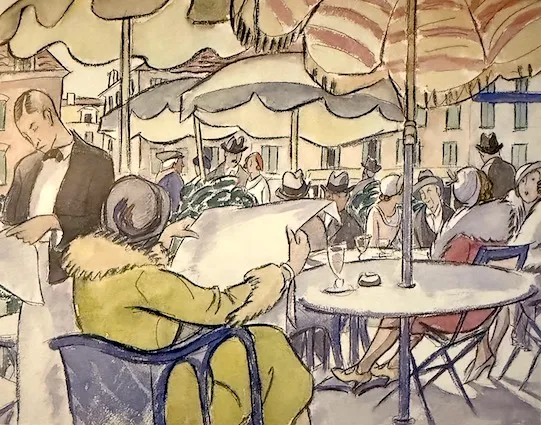
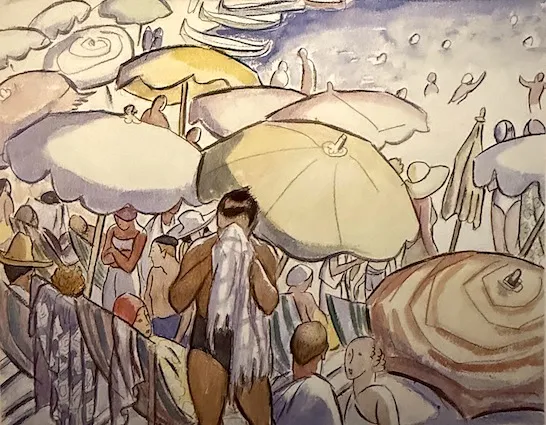
The reporter mentioned above also offered insights into the couple’s artistic activity at a time when Mars was particularly productive and experimenting with new techniques while Squire pursued her work with the Société des Dessinateurs Humoristes and painted local landscapes, people, and houses:
They have both a very bold sense of decoration. Miss Squire likes to paint buildings. Ethel Mars enjoys a large figure against a remote background, outdoors. She has a great many compositions, which show the same motive, which is a vase of flowers on the window sill, the open window behind revealing a street scene or a landscape with distant hill towns, olive trees, palms, etc. At first, she used to paint a strip of lace curtain and emphasize the window sill in order to indicate that the flowers were at close range and the landscape or street scene in the background; but now she simply stands the pot of flowers on the windowsill, paint it and the landscape behind it as one thing and leaves it to the beholder to discover why the vase is so large and the landscape so small. Her latest works are figure pieces, showing a tropical beauty seated among an opulent growth of plants. These pictures are powerful and rich in a sense of beauty.
Ethel Mars showed me a series of extraordinary drawings which she made with her toes. It develops character, she told me, to draw with the feet. Anybody can draw, after a fashion, with his hands, but to draw with the feet requires marvelous concentration, and enormous willpower. It takes any amount of character, she explained, to make yourself do it. Most of the subjects were her friend Miss Squire, seated in the garden at the tea table with the mountains behind her. The figure of Maud Hunt Squire was easily recognizable. Miss Mars explained to me that she was unable, with her hands, to get the quality in the lines which she got unconsciously in drawing with her feet. If you knew her, you would understand that she is incapable of affectation. She could not affect a naïveté in drawing, as so many modern artists do, thinking that they are recapturing the spirit of Cezanne. To get that naïve quality Miss Mars told me, “I was obliged to draw with my feet which are not so clever as my hands. I could not make my hands produce the same kind of lines that my feet produce of themselves” (December 17, 1933, 56).
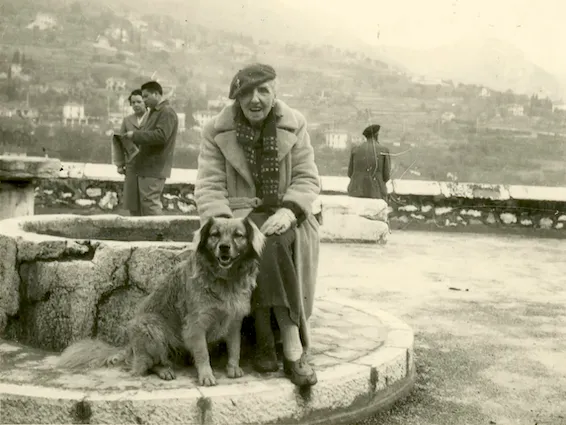
With the outbreak of World War II, life in Vence grew precarious, and Mars and Squire were forced to abandon their villa, taking refuge in a hotel in Goncelin in the Isère region of southeastern France, where they remained during the most uncertain years of the war. By that time, Squire appears to have ceased all artistic activity. In the late 1930s, the couple became friends with Cincinnati artist Lilian Witteker, who had also studied at the Cincinnati Art Academy under Frank Duveneck in 1899. Witteker lived in a château near Tours and, after World War II, spent summers visiting Vence. A close friend of Edna Boies-Hopkins, she owned several woodblock prints, drawings, and watercolors by the three artists (Sandler, 32).
By 1944, Mars worked mostly out of her notebooks, using watercolors, colored pencils, and graphite to sketch portraits of people around the French riviera. Most of the subjects were of Squire, seated in the garden at the tea table with the mountains behind her Although her professional life was far less ostentatious than that of her younger years, she remained eccentric in style and behavior up until her death. Dorothy Squire, Maud’s niece, described her in the following terms:
[...] she wore long earrings, and had a half a dozen bracelets around each arm, ringing when she moved —To dress she never followed the fashion but only her own personal style—a summer dress in the winter if it was warm enough, and usually the same little felt hat of which she changed the trimming: a flower or a feather, or then, in hot weather, a little flat straw hat, chinese style, with a ribbon under her chin… After her (daily) marketing, Ethel sat at the cafe under the trees drinking her coca cola, to watch the people go by, or to have a chat with those she knew and sit at her table to take their cup of coffee. And when she came back home for lunch, first thing she’d howl on the door stop, “I’ve got some fine news,” and she’d be telling all the village gossip (Ryan, 5).
Squire died at 81 of heart failure on October 25, 1954; in her niece’s words, Maud’s was never about luxury but about harmony and authenticity:
She was what I call “stylish”, as well as for her dressing as for her manners—one knew at once that she was a lady. But she was not for ruffles and ribbons and what some people call “luxury”—she liked what is harmonious. Her jewels had to be “artistic” rather than “real;” some of her bracelets were only brass, and a quartz shining on a ring made her as happy as if it were a diamond… She was not for money either; she had enough to lead her own life and did not enjoy “extravagance” (cited in Ryan).
Mars followed on March 23, 1959, succumbing to congestive heart failure at La Farigoule. She was 82 years old. Their passing brought to a close a remarkable artistic and personal partnership that endures even in death, as they are buried side by side in the Vence cemetary.
During the middle of the 20th century, Mars, Squire, and the other Provincetown Printers faded into relative obscurity. Only in 1983, with Janet Flint’s seminal exhibition “Provincetown Printers: A Woodcut Tradition” at the National Museum of American Art, did these artists return to the public eye. From then on, Mars’ work has been shown at the Springfield Art Association and the MFA Boston. Her time in Paris has also been highlighted at the Galerie Berès and, most recently, the National Portrait Gallery in their show “Brilliant Exiles: American Women in Paris, 1900 - 1939.”
Art historian and independent curator Tara R. Keny has conducted extensive research on both Mars and Squire. In collaboration with her father, James Keny, owner of the Keny Galleries in Columbus, Ohio, she co-curated The French Connection: Midwestern Modernist Women at Capital University's Schumacher Gallery. The 2014 exhibition was the first to bring together a remarkable circle of women artists who worked and studied in Paris and Provincetown, Massachusetts. Featuring the work of ten American women artists active between 1900 and 1930, the exhibition explored their artistic achievements, professional relationships, and shared commitment to modernism. Watercolors and prints by artists such as Jane Peterson, Edna Boies Hopkins, and Alice Schille, among others, highlighted the innovative approaches these women brought to early twentieth-century American art.