Third Year in Paris Program
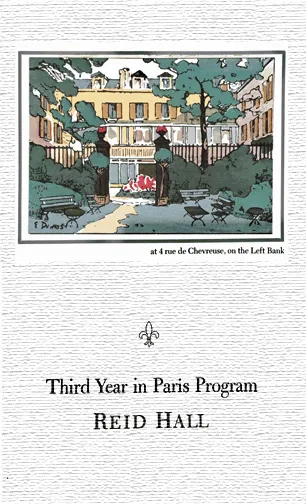
Perhaps the most significant academic program of Reid Hall’s post-WWII era was the Third Year in Paris Program, conceived by Dorothy F. Leet, Reid Hall's director, and brought to life with the help of Virginia C. Gildersleeve. A meeting was held in New York at the home of Mrs. Thomas S. Lamont to present the idea of this third year program to administrators and directors of American junior colleges for women. The minutes of the meeting of the advisory committee (November 25, 1952) included the program proposal.
In her report to the Reid Hall board, Leet summarized the objectives of this program:
"[...] for a select group of students recommended by accredited Junior Colleges, who wish to spend an academic year in Paris gaining further knowledge of French civilization. It offers courses in art or music, political or social sciences, French language and literature, and includes a special course on the French theater" (RH Report, 1952-1953, Barnard Archives).
The overall curriculum required a mix of courses both at Reid Hall and at French universities, as well as site visits and excursions.
Students enrolled in 30-32 semester hours of credit, 12-14 hours in French language and literature, 6 in the history of drama, 6 in art history, and 6 in French history. Although the courses and instructors would vary, the list below is representative (Bennet file, Smith Archives):
- “Cours d’orientation à L’Ecole Supérieure de Préparation, Sorbonne, en octobre--15 hours weekly--required of everyone.
- “L’art français du Moyen Âge et de la Renaissance.” Three hours weekly taught by Madame Goldscheider, Ecole du Louvre. And “l’art français des 19e et 20e siècles.” 3 hours weekly, Monsieur Sérullaz. Visits to Paris churches, Saint Denis, etc. Visits to Louvre or Orangerie.
- “Littérature des 19e et 20e siècles en France. Monsieur Van den Heuvel, Centre International Pédagogique, Sèvres.“
- “Littérature du Moyen Âge et de la Renaissance en France, Miss Bennett, 3 Hours weekly.”
- “Le Théâtre en France”: Monsieur Georges Sallet, Agrégé des Lettres, Professeur au Lycée. 18 planned excursions to theaters.
Excursions usually took place early in September (Normandy, Burgundy, Châteaux of the Loire, Chartres, Mont St. Michel, Angers, Fontevrault, Azay-le-Rideau, Chenonceaux, Bourges, Vézelay, Fontainebleau, Versailles), with a weekend excursion to Belgium in October (beginning in 1959). Visits to museums, theaters, and other sites of interest in Paris complemented the coursework.
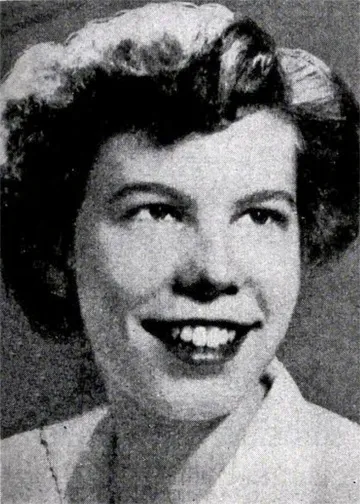
A 1952 alumna from Barnard College and recipient of a Fulbright Fellowship to study in Paris, best summarized her experiences in the program:
"I had been staying at Reid Hall, the American University Women’s Center, and had come to love this Montparnasse quarter, with its quiet tree-lined avenues that suddenly come alive with neon and nightclubs after midnight, with its artists and quaint old studio buildings. It was a nice surprise, therefore, to find a room not far away, on the other side of the boulevard, in the same house with “Chez Henriette,” a good and inexpensive little restaurant well-known to many students [...] The courses are all interesting and should help in my preparation for teaching. My program includes phonetics, theoretical and practical grammar for teachers, translation, French history and two lit. courses—one medieval and one 19th century. All kinds of trips and activities are planned for us. I have visited an automobile factory (modern, a pleasant place to work, but allegedly seething with Communists), the Gobelins tapestry works, and the well-known École Normale Supérieure; André Siegfried, Francois Mauriac, Jean Vilar and many others have given interesting and unusual lectures; and we have made several group trips to such places as Chartres and Rouen. In the near future is a trip backstage at the Opera and a visit to the Assemblée Nationale" (Barnard Alumnae Magazine, May 1953, 5).
The program came to en end in 1964 when Columbia University was gifted Reid Hall. Over the course of its ten-year existence, it attracted an average of 25 students. By 1964, the cost of the program, including housing, ranged from $2,250-$2,750.
1952-1953: 8 students from Barnard, Leland, Stanford, Swarthmore, University of Kansas. They began their semester with an orientation period involving excursions to the Chateaux de la Loire, the Mont St Michel, Bourges, and Vezelay. In November, they enrolled in classes on French civilization and language at the Sorbonne, art and art history at the École du Louvre, and theater, with attendance at eighteen theater productions.
1953-1954: 21 students from Bradford (8) and Pine Manor Colleges in Massachusetts; Briarcliff; St. Lawrence University in New York; Mt. Vernon and Margaret Webster College in Washington D.C.; Christian College in Missouri; advanced students from the Winsor school in Boston and Sidwell Friends Seminary in Washington.
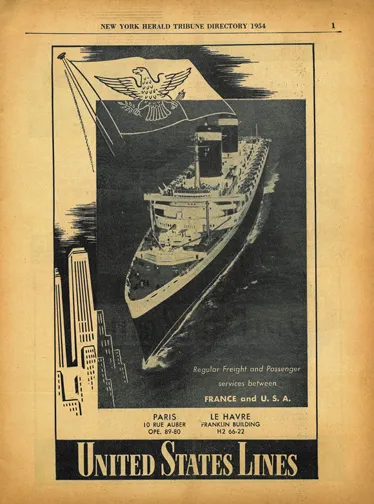
1954-1955: Together with their director Alice Bennett, students sailed on the SS United States after enjoying tea at the Westbury Hotel in New York. In the fall, the program developed a small project of special work for beginning French students so they could then undertake regular coursework the second semester. Students originated from Bradford, Lasell and Fine Manor in Massachusetts; Hollins in Virginia; University of Wisconsin; University of Michigan; Rockford College in Illinois; Western in Ohio; Finch College; the lycée at Kabat; and advanced students from Winsor school, Brearley, and Miss Finn's School.
1955-1956: 24 students from four-year colleges and accredited Junior Colleges, including four from Mexico, sailed together with Alice Bennett, their director, after enjoying tea at the Westbury Hotel in New York City.
1956-1957
1957-1958: Together with their director Alice Bennett, students attended a tea for 50 guests at the Westbury hotel before sailing on the SS United States.
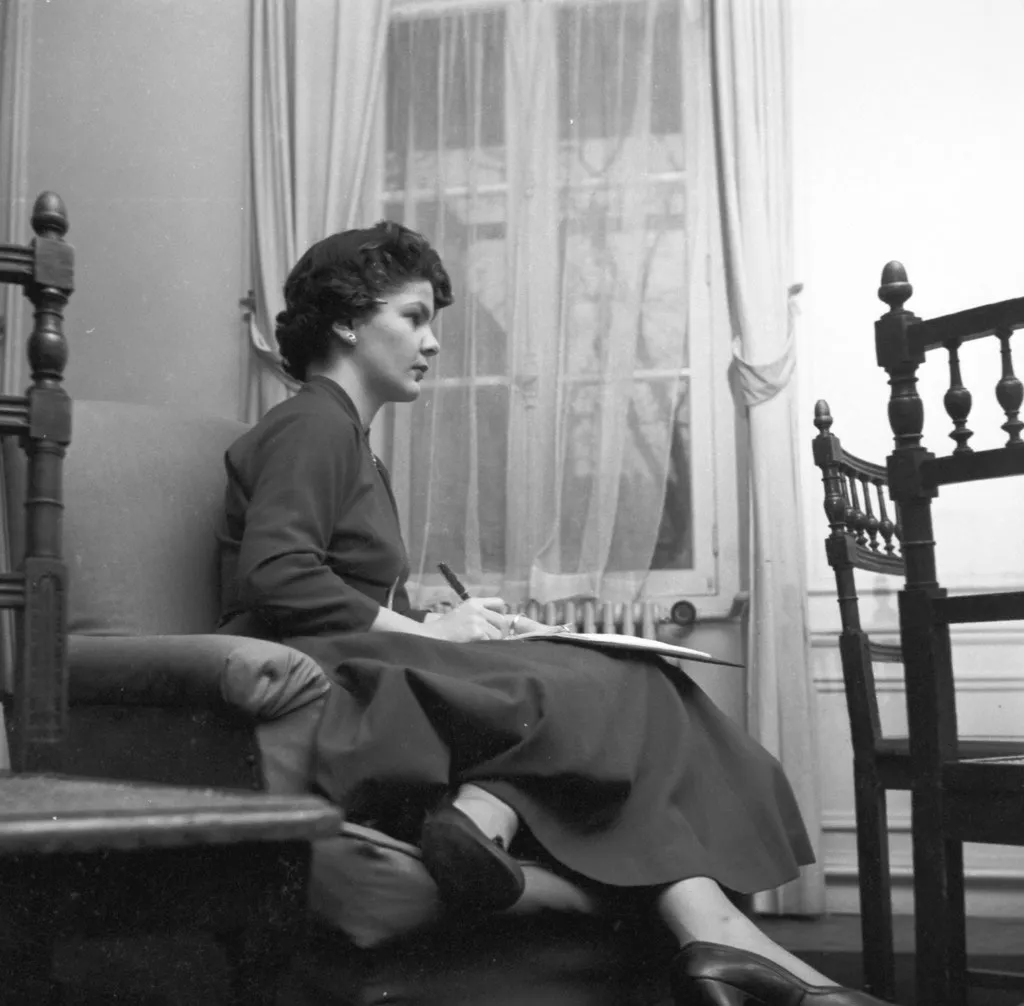
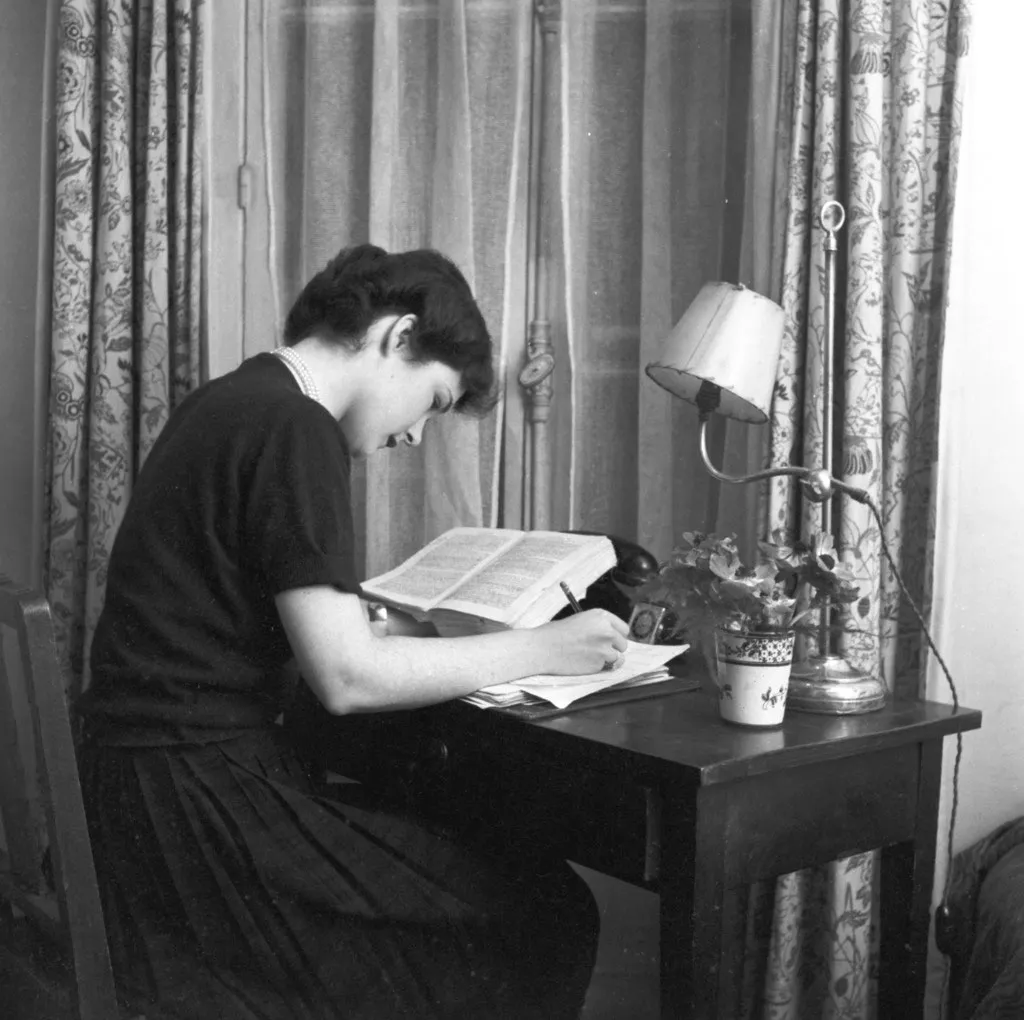
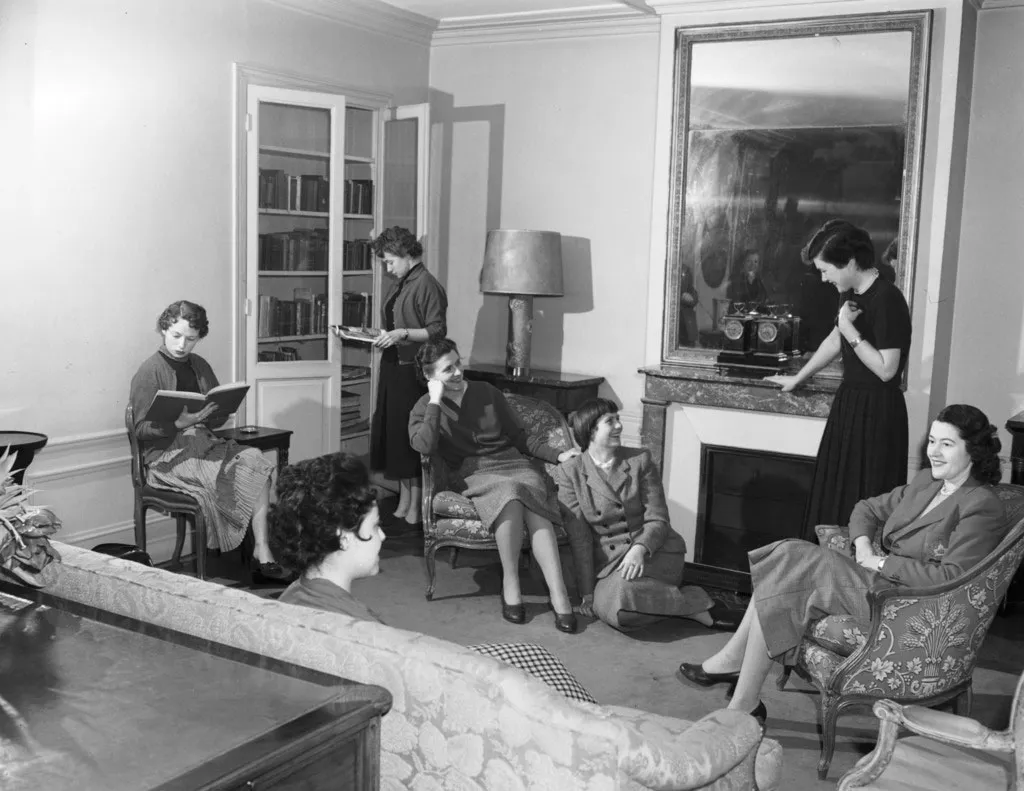
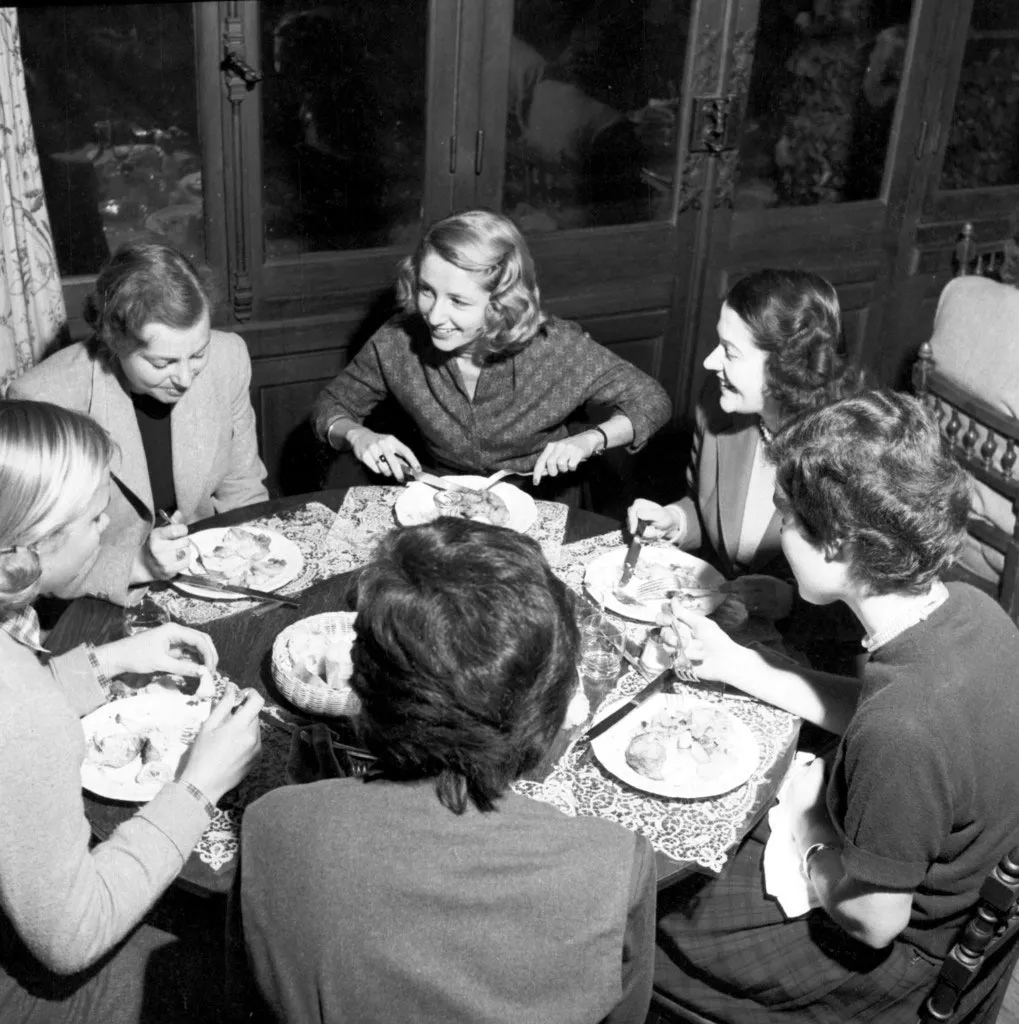
Image Carousel with 8 slides
A carousel is a rotating set of images. Use the previous and next buttons to change the displayed slide
-
Slide 1: Talking in Vestibule
-
Slide 2: Studying
-
Slide 3: Studying
-
Slide 4: Relaxing
-
Slide 5: Eating
-
Slide 6: Dining Hall
-
Slide 7: Philosophy class
-
Slide 8: Studying in Library
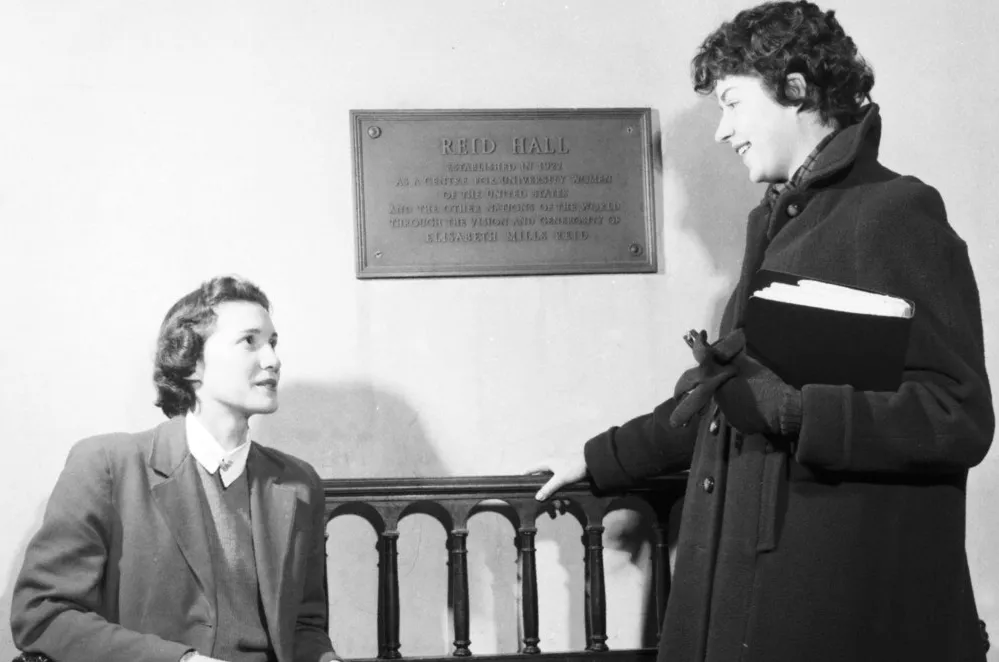
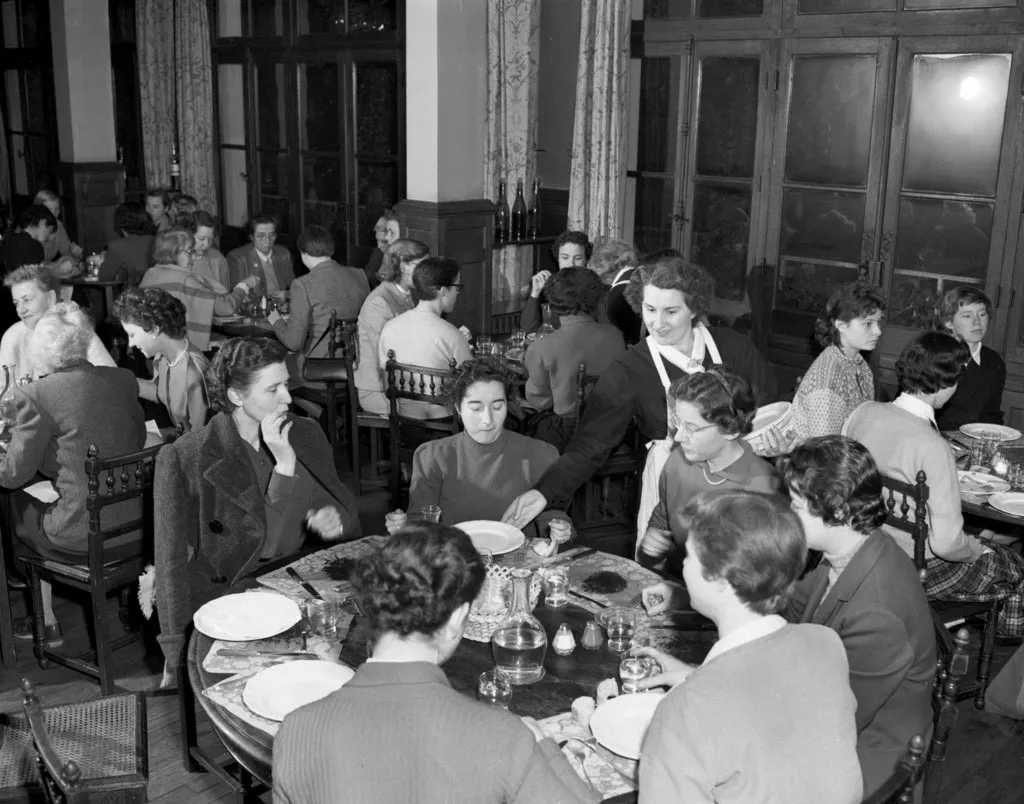
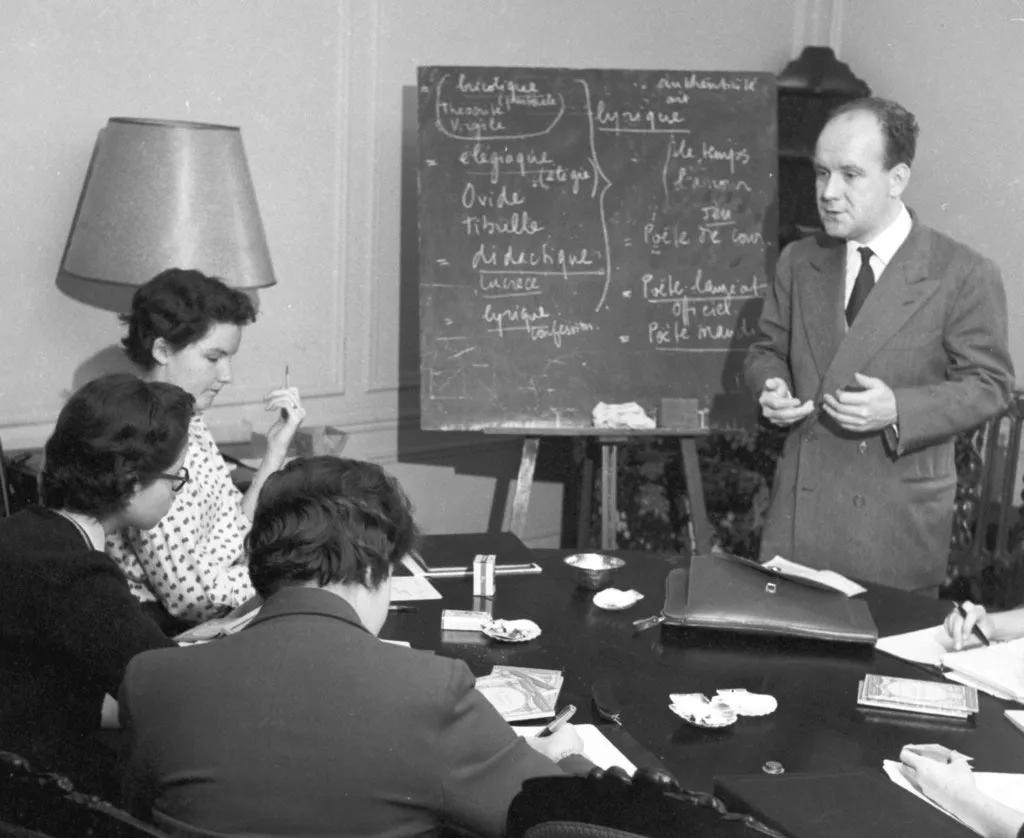
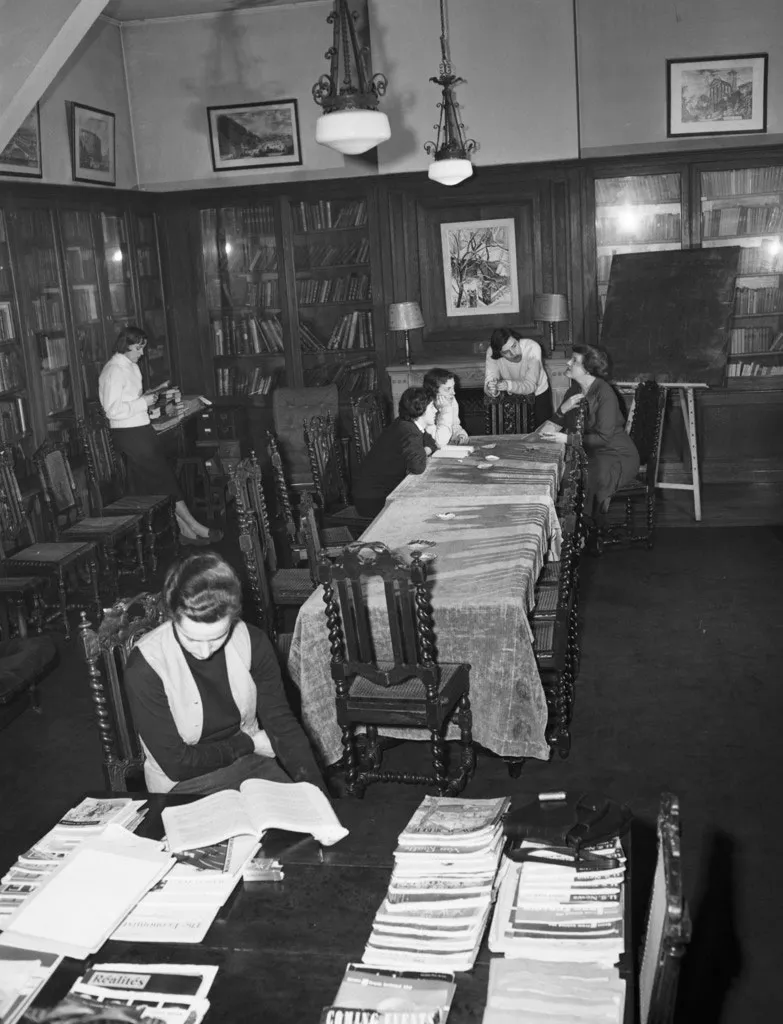
1958-1959: Bennett resigned to return to the U.S. Barbara M. Clough, former Headmistress of the Northfield School for Girls and trustee of Colby Junior College, was named director of the program.
1959-1960: 20 students from 16 colleges. Full year: langue, literature, medieval studies, theatre, history of French art. A weekend trip to Belgium was included. The Winsor School of Boston provided scholarship to the top French student for the Third-year program: "Winsor scholars are able to start college as sophomores in recognition of the academic excellence of the Reid Hall Third Year course, and graduate in three years" (Leet, minutes of annual meeting, January 14, 1959).
1960-1961: 28 students from 14 colleges. Addition of a course on French History from 1660-1960. A new director was name for the program: Dorothea Norwood, French department, Bradford Junior College.
1961-1962: 25 students from 15 differents colleges in the U.S. were enrolled in the program. Director: Dr. Catherine Fehrer: PhD, Bryn Mawr, professor of French language and literature at Suffolk University. Also studied at the Sorbonne and the École normale de Sèvres. She had served as Assistant Director of the Sweet Briar Program in Paris.
1962-1963: 25 students from 15 different colleges. Charlotte Girard from the University of Vancouver and Bryn Mawr was named director.
Sample Memorandum prepared by the director Charlotte Girard sent to students in the 1962-1963 program:
“In general the clothes you wear for college at home will be correct. Sweaters and skirts are right for class. Slacks and shorts are not worn in the garden or public rooms of Reid Hall, in class, nor on the street, and are not often appropriate in Europe. Suits are good, some simple wool dresses, a few dresses for afternoon and evening (short). Bring a warm coat, a raincoat, perhaps a storm coat for winter. Paris is damp in the winter and light weight woolens are welcome. In addition to a light negligee you will need a warm one and warm slippers. You will be glad to have bedjackets. Pack ski clothes if you plan to ski during the Christmas vacation. Be sure to bring enough comfortable shoes. You will walk miles. A few summer clothes will be useful in May and June. In general plan carefully for storage space is limited. Bring nylon underwear and nylons. Kleenex, Kotex or Tampax are available but expensive in France. Bring a hot water bag. You will need an English dictionary, as well as an English-French one, and a handbook on mythology. A good supply of small photographs of yourself is necessary. An allowance of fifty dollars a month should be adequate for normal personal expenses. Money may be brought in traveller’s checks; or personal checks on American banks, endorsed by the President of Reid Hall, may be cashed at the bank used by Reid Hall. It is customary in France for the students to give four dollars per student to the Christmas Fund for the personnel, and ten dollars at the end of the year in June for the personnel.”
1963-1964: 28 students from 13 different colleges. This was Charlotte Girard's last year as Director;
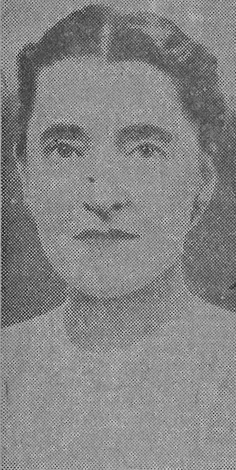
List of Third-Year Group Directors
1953-1954;1954-1955; 1955-1956; 1956-1957; 1957-1958: Miss Alice Ross Bennet, returned to the U.S. Her letter of resignation is dated June 3, 1958.
1958-1959, 1959-1960: Barbara M. Clough, studied in Lausanne, Paris, University of New Hampshire, dean at the George School in Northfield, President of the Association "American Friends of the Collège des Cévenol," board of directors Colby College, New Hampshire.
1960-1961: Dorothea Norwood, French Department, Bradford Junior College.
1961-1962: Dr. Catherine Fehrer, Bryn Mawr and École de Sèvres.
1962-1963, 1963-1964: Charlotte Girard, former head of French House at Bryn Mawr, grew up in France but studied at the University of British Columbia.
Sources
- "Barnard Alumnae Abroad: Two Fulbright Scholars Write Home." Barnard Alumnae Magazine, May, 1953, pp. 5-6.
- Leet, Dorothy Flagg. Reports to members of the Reid Hall board, 1948-1963. Barnard Archives.
- "New Reid Hall Director Named." New York Herald Tribune, June 2, 1958.
- "Paris Study Director: Miss B. M. Clough to Head Reid Hall Third-Year Plan" New York Times, June 2, 1958.
- “Reid Hall Tea for Fifty Today.” New York Herald Tribune, September 18, 1957, p. 17. ProQuest Historical Newspapers.