University of Delaware
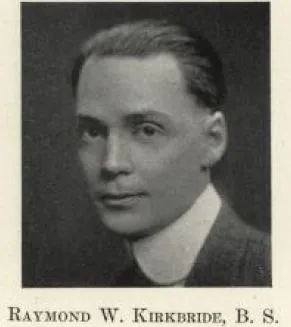
America's first study abroad program began in 1923 at the University of Delaware thanks to a young, innovative Modern Languages professor named Raymond W. Kirkbride. A veteran of WWI, Kirkbride had developed an appreciation for French people and culture during the war and believed that studying abroad could help promote cross-cultural understanding. He proposed such a program to Delaware's president, Walter S. Hullihen, who also saw the value in producing more well-rounded students who might pursue careers in international affairs. Despite America's isolationist tendencies in this period, Hullihen approved the "Delaware Foreign Study Plan", which was later renamed the "Junior Year Abroad".
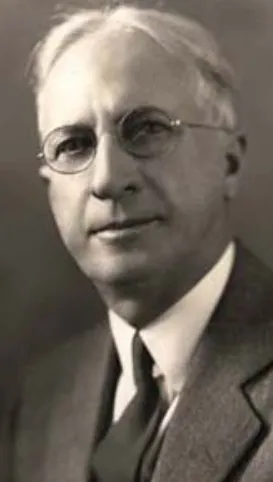
Beginning an enterprise like this with no precedent required a great deal of planning and support from within the university and from prominent Americans outside of academia. Hullihen met in Washington with then-Secretary of Commerce, Herbert Hoover, who endorsed the program wholeheartedly. President Hullihen then met with local Delaware philanthropists like Pierre S. du Pont, who also provided support. (Lisa Kochanek, University of Delaware Messenger, vol. 7, no. 2, 1998)
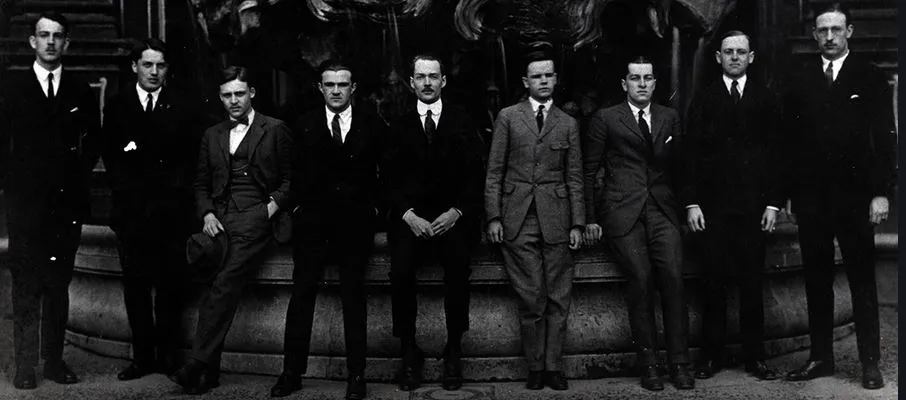
The first group of eight juniors sailed for France on the Rochambeau liner on July 7, 1923. They were: Austin P. Cooley, Francis J. Cummings, David Dougherty, Herbert L. Lank, William K. Mendenhall, J. Cedric Snyder, T. Russell Turner and J. Winston Walker. The men spent six weeks in Nancy in an intensive language immersion program before moving on to Paris to study at the Sorbonne.
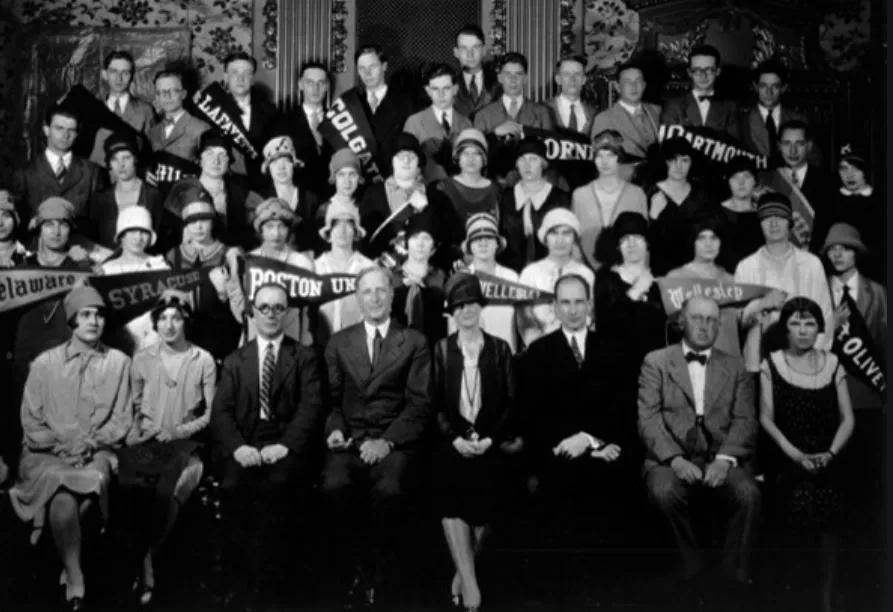
The success of the program's first year enabled the University to continue sending students to France and, in later years, to Switzerland and Germany. Undergraduates from other colleges and universities participated in the program as well. Between 1923 and 1948, 902 students from the University of Delaware as well as from Columbia, Penn, Wellesley, Wesleyan, Brown, Smith, Harvard and Princeton, spent their junior years abroad thanks to Kirkbride and Hullihen's program.
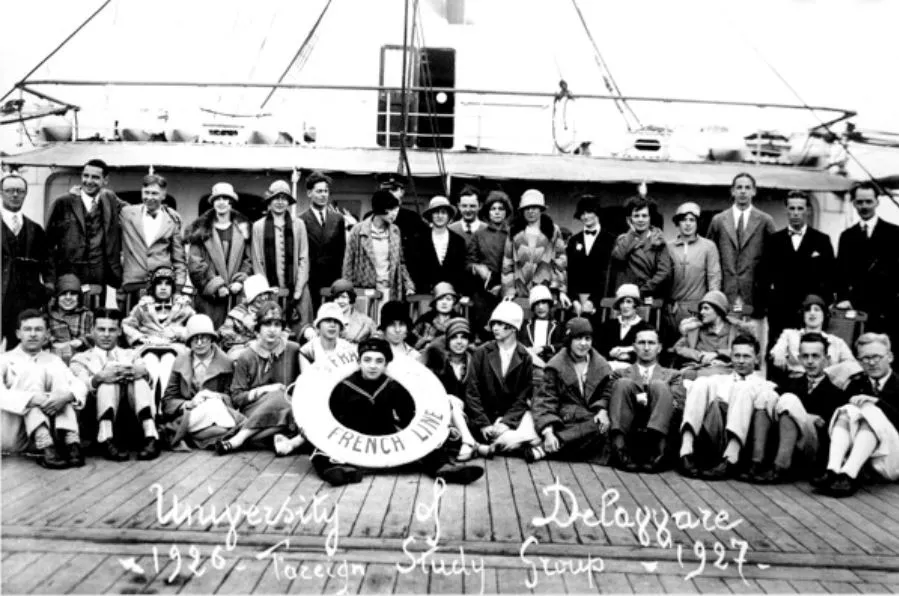
The Delaware program's impact on its participants, known as "Delforians," was substantial. Archival records indicate that they began holding their own reunions as early as 1930 and they raised funds during WWII for "Delforian Ambulances for France."
Postwar uncertainty and a new president at the University of Delaware led to the discontinuation of the Junior Year Abroad program. Sweet Briar College took over managing the enterprise and ushered in a new era of study abroad by partnering with Reid Hall to house their students in Paris.
Study abroad at the University of Delaware resumed in 1972 through "Winterim" programs that sent students to London, Paris, Rome, Vienna, Munich, Berlin, Geneva and Hamburg, during the short intercession between the fall and spring semesters. Today, they offer a wide variety of study abroad options for their students, with programs akin to Kirkbride and Hullihen's 1923 innovation, the Junior Year Abroad.