Student and Resident Profiles
“My Junior Year in France . . . has been the most important event of my life to date. Practically speaking, the fact that I was proficient in French helped me to obtain my first job, which was one for which I had aimed. . . . Although I did not use French a great deal in my work, it was on a number of occasions extremely valuable and contributed to my advancement and subsequent jobs. Since my marriage to a man in the diplomatic service, who now speaks French with some fluency, I have found many occasions where my French has proved useful; it has made contacts which have enriched our lives socially as well as benefited my husband professionally. Thanks to courses in art and literature which I had in France, I have continued to study in these fields with special interest. Even my taste in food bears evidence to a year of eating French cuisine. Nearly twenty years after the fact, I can see, even more clearly than at the time, how much twelve months in France affected my life” (Pace, 30).
“[...] the relationships between French family and boarder were, with only two or three exceptions, described as affectionate or cordial. It is true of course that some students are described as shy or reserved, but none was described as rejecting the family life in their French home, and nearly all of them were seen as entering into the family life quite easily and naturally and happily. Almost all of the students have kept up correspondence with the French families at whose home they have lived. Two of the families interviewed indicated that there had not been any subsequent correspondence. Most typically the American students write from two to four times a year, many of them send parcels, and almost all of them write regularly at Christmas. Correspondence is naturally more frequent at first. It apparently tends to persist at least to the extent of a long Christmas greeting for a good many years. The over-all impression which American students are making upon French families is rather nicely summarized by a young woman from Tours who has had students from the Sweet Briar Junior Year in France program living at her home for the past five years. "Before I knew these fine young American people we believed that their chief characteristic was outrageous egotism, and exaggerated independence, and a profound disdain of our old civilization. We have noticed with astonishment that these young girls and boys had also at home a family life very much like ours. We have found them to be friendly and considerate. They are intelligent, resourceful, and eager to learn and understand. When they leave, they always wish to return to France and they do not hesitate to come as far as Tours to see us again, knowing that they will be received with as much joy as young relatives come for a visit. The young people from the Sweet Briar program are good ambassadors from the United States." (Pace 19-20)
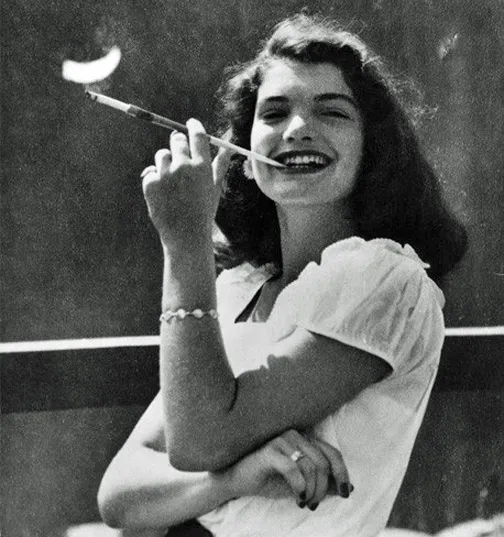
"One of the most rewarding periods of my life was my Junior Year in Paris with the Smith group. I found that the knowledge of a foreign language, acquired by any student who is fortunate enough to study abroad, has an immeasurable and lasting effect on his life." (Letter, JYA, November, 1961)

(...) a phenomenon as powerful and versatile as the American romance with France has played a vital role in Davis’s story (...), Alice Kaplan
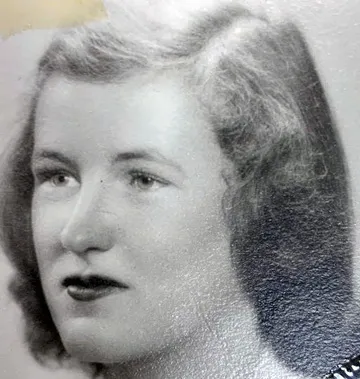
1961 report to members, leet
Residents
- Dorothy Garrod
- Dr. Chaudhuri, India
- Dr. Vinglundsson, Iceland
- Many south Africans
1961 Art Scholarship Holders
- Karla Nelson
- Mariana Hoogendyk
- Mlle Huber
10 scholarships to French university women who take their meals at RH
1 scholarship to a British scholar who lives each each year for the summer
"During the year ending June 30th, there were approximately 800 different guests from thirty countries, and in the fourth months since July 1st we have welcomed an additional five hundred. They represented all phases of women's activities, among them members of Parliament in Japan and Israel, doctors and nurses attending the Congress for Mental Health, librarians, teachers of French from many countries, writers, artists, musicians, political scientists."