Maude Miriam Noel (1869 – 1930)
Research and draft by Jacqueline Yu, B.A. in Art History and East Asian Languages and Culture, Columbia University in the City of New York, 2024. Columbia Global Virtual Intern, 2023 – 2024. Edited and expanded by Brunhilde Biebuyck.
Miriam Noel, who began her adult life as a celebrated sculptress in Paris, is now remembered less for her artistic accomplishments than for her turbulent relationship with architect Frank Lloyd Wright—a passionate and volatile affair marked by separations, reconciliations, and public legal disputes that filled newspaper columns with sensational headlines. Though she is said to have moved in elite artistic circles in Paris and received acclaim for her talent, nearly all contemporary narratives begin not with her creative work, but with her dramatic entrance into Wright’s life following the tragic murder of his partner, Mamah Borthwick. At that point, Miriam quickly became a central figure in Wright’s personal saga, her identity increasingly entwined with his. Over time, she appears to have set aside her own creative pursuits, choosing instead to support the man she admired and ultimately condemned. Her identity as an artist faded from public memory, gradually eclipsed by the emotional intensity and eventual disintegration of their relationship. While she is frequently referred to as a "renowned sculptress," no known examples of her work survive—only photographs of her remain, preserved not for her artistic contributions, but for the role she played in Wright’s often stormy life.
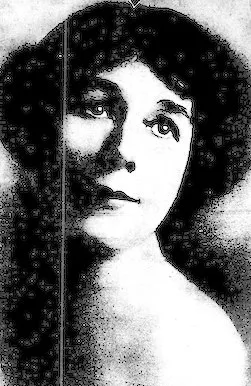
Maude Miriam Hicks was born on May 9th, 1869 in Memphis, Tennessee to a wealthy and storied Southern family. Her grandfather was a prolific plantation owner in western Tennessee, and her father, Andrew Hicks, was a well-known local doctor. Growing up under such advantageous conditions, Miriam developed a luxurious taste in art, fashion, and design, a predilection that would follow her for the rest of her life (Secrest 237). According to biographer Meryle Secrest, Miriam travelled with “trunks full of clothes, probably custom-made… wearing capes and turbans and all manner of chokers, necklaces, brooches, rings, and a monocle suspended from her neck on a cord of white silk” (238). Akin to other Southern women of her status at this time, Miriam forewent schooling for marriage, and as a teenager, she wed Emil Noel, a young man of a similarly privileged background. The pair moved to Chicago where Emil found work as a department store executive. There, the Noels had three children: Norma, Thomas, and Corinne. Unfortunately, Miriam’s years in Chicago are not well documented. Sometime around the beginning of the 20th century, she divorced her husband and moved to Paris (Secrest 238).
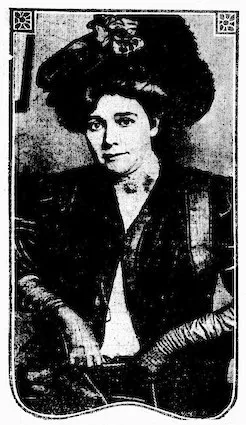
Miriam spent the next decade pursuing a career as a sculptor and socializing with American and British expatriates, artists, and writers. In 1914, using the name Mrs. Maude Noël, she shared a $100 prize with Gertrude Vanderbilt Whitney in the AWAA’s March sculpture exhibition at 4 rue de Chevreuse, an award sponsored by Elisabeth Mills Reid. According to The New York Times, Noël exhibited "two decorative heads" (March 29, 1914, 31), while the Daily Press reported "two decorative heads and one child figure" (April 3, 1914, 7). There were also rumors that the Louvre had acquired one of her works. Beyond these references, however, there seems to be no further documentation of her sculptural output.
Her expansive circle of expat dilettanti translated to a refined, opulent life. According to her personal memoir, her home in Paris contained “a painting by Scott Dabo, a drawing of my [her] beautiful daughter by George Ade, etchings by Ade, a painting by René Castaigne, figures by Rembrandt Bugatti, a head of my [her] little daughter done by Prince Paul Troubetsky [sic], exquisite figures by Elie Nadelman and Zadkine, drawings by Richard Wallace, all treasured gifts I [she] had received from friends” (Secrest 238). Despite her prestige and excesses, Noel was not immune to scandal in Paris. She purportedly had an explosive fall-out with an ex-lover, with the conflict eventually necessitating police interference (Secrest 242). In addition, she was famously addicted to morphine, frequently consulted mystics, and considered “dangerously self-delusory” (Secrest 238, 240).
With the outbreak of World War I, Noel moved back to the United States and joined her daughter Norma in Chicago.
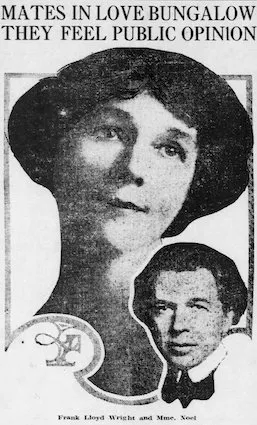
Shortly after the murder of Frank Lloyd Wright’s mistress Mamah Borthwick on August 15th, 1914, Noel penned a letter to the famed architect expressing both her condolences for his recent loss as well as lauding his accomplishments. Her effusive style caught Wright’s attention, and he invited her to a private meeting (Secrest 240). Newspaper accounts maintain they had already met in Paris and then again at the Chicago Art Institute, but nothing has surfaced to confirm this.
The pair immediately began a romantic relationship, living together in Chicago before moving to Taliesin, Wright’s home-studio in rural Wisconsin. At this time, Wright was still married to Catherine Tobin, his first wife and the mother of his six children. Wright and Noel thus faced derision from the local community as well as the domestic staff at Taliesin, especially housekeeper Nellie Breen (Secrest 244). After frequent clashes with Noel, Breen was dismissed from her position in October of 1915. In retaliation, the scorned Breen released intimate letters between Noel and Wright to the press and legal authorities, causing a media storm and the threat of legal action (Secrest 245). By transporting his extra-marital mistress across state lines, Wright was technically in violation of the Mann Act which “provided stiff penalties for the interstate transportation of women for ‘immoral purposes’” (Secrest 243). Although the criminal charges were dropped, Wright’s reputation was heavily damaged by the situation.
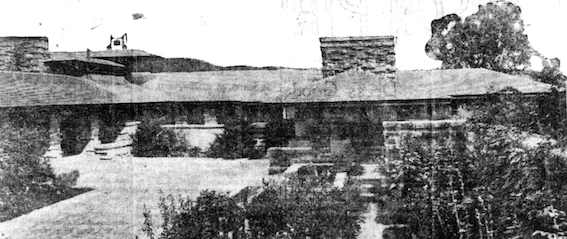
Besides the existence of the affair, the letters also revealed the contentious relationship between Wright and Noel. The couple frequently argued, with Wright expressing distaste for Noel’s fashion style, smoking, eating habits, and frequent bouts of jealousy (Secrest 243, 244). In turn, Noel would respond with biting remarks. For example, in one letter titled “Another Radiant Day Has Come with the Morning,” Noel wrote “Conscious that my flesh and covering are hateful to you, as usual, that would drag me down into ugliness. How strange that I love you! There must be some unconscious perception of ultimate realities. I am larger than the wounds you have made. I do not nurse them. They are among the things I am trying to forget” (“Sculptress and Beauty Pens Letters…”).
Both Wright and Noel issued formal statements to the press addressing the letters, their private lives, and the nature of their relationship. On November 7, 1915, Wright made the following declaration to the Chicago Sunday Tribune:
I cannot realize that my love or friendship for a woman, or a woman’s love or friendship for me, is a public concern. (…) for six years past I have made a determined, sincere struggle, to assert my right the right of any man to freedom of heart, mind, and body in the deeply personal, individual matters that are the life of the man, and that must be respected as such if we are to have any civilization worth the name-if we are going to become anything more than prurient, provincial, and mediocre. Yet for these six years, I have had no private life. I have been exploited, hooked up upon the curb of any gutter for a penny. It was most precious to me, has been stolen, stripped, or whipped from me flung under foot to gratify the man on the street. And it has all been done in the name of law and morality in the name of my children, whom my love, and who love me (1).
On the following day, Maude responded with a statement of her own, published in the Chicago Daily Tribune:
Because I love Frank Lloyd Wright and admire him more than all men and honor the life he has lived. I am here at Taliesin, the beautiful country home. I understand and deeply sympathize with the struggles and terrible trials his life and his great work have passed through. Now, because of my deep love for him, he is again subjected to persecution.My real faith in him has never wavered, but we have passed through deep waters together. I believe now, as then, that great as the artist is, the man is greater, but in attempting to have him understand my ideals, I have at times belittled him - I’ve been unfair and impatient in my criticism of him, as he has been unkind and impatient in his criticism of me. Our struggles with each other have only drawn us closer together. It is easy to worship a hero in him; I could too easily. Our love must be a great vital, living thing, standing by its own strength, protected by its own virtue. I am no advocate of any theories of sex idealism. The only hope of liberation must come not through intellectual concepts or rational propositions, but only through the illumination of the spiritual consciousness. If there is any justification of my position here it is that the work we hope to do together and the strength we can give each other is more important than a form, which in Mr. Wright’s life has become obsolete (1).
Wright, in turn, shared his own reflections:
Madame Noel [...] is one of the most brilliantly intellectual women I ever knew. She is wonderful, not only as a literary woman, but as an artist. [...] As for my relations with Madame Noel, […] I do not care to discuss them. They are among my life‘s sacred intimacy, which belong to the individual and in which the world has no concern (6).
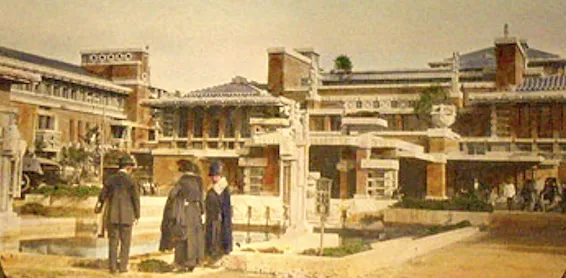
Despite their differences, the couple remained together for the next eight years—seven of which were spent in Japan, where Wright was engaged in designing and overseeing the construction of the Imperial Hotel (Secrest, 254). The project formally began in 1916, when Maude accompanied Wright to Tokyo, where he established an architectural office. During his time in Japan, Wright also completed several other commissions, including a residence for the Imperial Hotel’s manager, a girls’ school, and a guest house near Kobe.
As for Miriam, little is known about her personal life during these years abroad, aside from accounts of her bouts of jealousy, her morphine addiction, and the fact that she had abandoned her work as a sculptor to support Wright’s endeavors. According to Sandoval, she was said to have created textile designs for the Imperial Hotel (66). Despite two noted separations, the couple appears to have lived in relative harmony for much of their time together. As Secrest writes, “He and Miriam had managed to live together now for several years in occasional peace and harmony.” In a letter from the early summer of 1919, Wright offered a glimpse into their daily life: “We ride about a good deal, buy a little here and there, have a little time for two or three friends—Read together, study some, each in his or her own way, work at prints, walk over Tokio [sic] and eat three meals every day and sleep ten hours or so every night” (Secrest, 275).
With the completion of much of the Imperial Hotel project in 1922, the couple returned to Taliesin in mid-August.
Wright’s wife finally agreed to a divorce, which was settled on November 13, 1922, though it was not officially finalized until a year later (Field, The Independent, 8 March 2009). Wright and Noel were married in an intimate midnight ceremony near Taliesin in November 1923, but the marriage quickly began to unravel. By May 1924, Noel had left Wright and fled to California to stay with friends (“Miriam Wright Former Wife of Architect Dies").
In late November 1924, Wright attended a ballet matinee in Chicago featuring the dancer Tamara Karsavina. It was there that he met Olgivanna (Olga Ivanovna Lazović Hinzenberg), a Montenegrin dancer and recent devotee of G. I. Gurdjieff. According to Wright’s own memoirs, their meeting sparked an immediate and profound connection. They embarked on a relationship shortly afterward, even as both were still legally married. In July 1925, Wright filed for divorce from Miriam Noel on the grounds of desertion, following her abrupt departure from Taliesin the previous year. Miriam returned to Chicago and countersued, accusing Wright of extreme cruelty throughout their relationship (“Frank Lloyd Wright Sued for Divorce"). Upon discovering that Wright and Milanhoff had moved in together, Noel turned to the press, calling for Olga’s deportation on the grounds of her being an “undesirable alien” (“Wright Flees to Dodge U.S. Law…”).
Throughout 1926 and the first half of 1927, the couple continued to publicly withdraw and refile divorce suits, exhausting both Wright and Noel’s finances and destroying their respective credibility. Noel “stormed” Taliesin multiple times, attempting to commandeer the home with her rights as legal wife (“Storms Taliesen [sic] in Vain”). She sued Olga for $100,000, accused her of stealing her husband, and claimed that, while Noel was destitute, Wright kept his mistress in the lap of luxury (“Wife of Noted Architect Sues”). Wright retaliated by telling the press that Noel was insane and should be institutionalized (“Wright Hints at Sanity Hearing…”). Amidst the media frenzy, Wright and Olga were charged with violating the Mann Act and, despite initially attempting to flee, they were detained (“Will Press Charges…”). The charges were eventually dismissed.
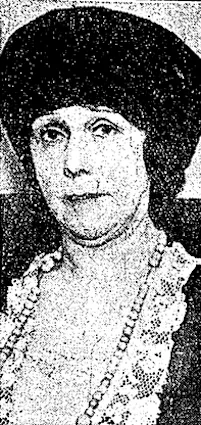
Noel and Wright finally agreed to a divorce settlement in August of 1927, with Noel receiving approximately $36,000 (“Wright May Wed Again…”). She announced to the press that she planned to leave for Paris or Bermuda, debuted a face-lift, and, according to one article, adopted a baby (“Miriam Wright Given Divorce…”; “Miriam Wright Reopens Fight on Ex-Husband”). However, in October, Noel was apprehended for “sending obscene matter through the mail,” namely a hateful letter about Wright addressed to one of her friends (“Miriam Wright Reopens Fight on Ex-Husband”). Almost a year later, Noel was arrested again for breaking into Wright’s La Jolla home and destroying furniture valued at $1,000 (“Mrs. Miriam Wright is Sentenced to Jail”).
Frank Lloyd Wright and Olgivanna Lazović Milanoff were married on August 25, 1928, in a private midnight ceremony near his home at Taliesin in Rancho Santa Fe, California (“Famous Architect Divorced and Weds").
Despite her announcements to the press, Noel never moved back to Paris. She died on January 3rd, 1930 of complications from a surgery in Milwaukee (“Mrs. Wright Dies in Milwaukee…”). For the last few years of her life, she dealt with numerous degenerative diseases (Secrest 340).
Nearly 80 years after Noel’s death, acclaimed author T Coraghessan Boyle published his novel The Women which details the stories of Frank Lloyd Wright’s wives and lovers. Despite beginning with Olga and ending with Mamah Borthwick, Noel and Wright’s dramatic saga takes center-stage, immortalizing Noel as vengeful and narcissistic yet also a victim of Wright’s whims.
Sources
- “$250 Per Month Acceptable, Hint of Mrs. Wright.” Chicago Daily Tribune, October 9, 1926, pg. 6. ProQuest Historical Newspapers.
- "Art Romance Dies under Cherry Buds." New York Herald [European Edition], 28 Nov. 1925, p. [1]. International Herald Tribune Historical Archive 1887-2013.
- “Artist Named in Woman’s Story of Frank Lloyd Wright.” The Richmond Paladium and Sun-Telegram, p. 5. American Newspapers. Library of Congress.
- “Both Wright Cases Dropped.” Los Angeles Times, August 31, 1928, pg. 6. ProQuest Historical Newspapers.
- Boyle, T Coraghessan. The Women. Penguin, 2009.
- “Bungalow Life Defended by Frank Wright.” Chicago Daily Tribune, November 7, 1915, pg. 1. ProQuest Historical Newspapers.
- Burns, Walter Noble. “‘It’s All True’ – Maude Noel.” Chicago Daily Tribune, November 7, 1915, pg. 1. ProQuest Historical Newspapers.
- “Cash Holds Up Agreement in Wright Trial.” Chicago Daily Tribune, May 21, 1926, pg. 1. ProQuest Historical Newspapers.
- “Defends Love Ideals.” The Washington Post, November 21, 1915, pg. E3. ProQuest Historical Newspapers.
- “Divorced Wife of Wright Dies.” Los Angeles Times, January 4, 1930, pg. 3. ProQuest Historical Newspapers.
- “Famous Architect Divorced and Weds.” The Washington Post, August 27, 1928, pg. 3. ProQuest Historical Newspapers.
- Field, Marcus. “Architect of Desire.” The Independent [London, UK], March 8, 2009. ProQuest Central Database.
- Finucan, Stephen. “Frank Lloyd Wright, a genius who loved women to misery; T.C. Boyle imagines the famous architect.” Toronto Star, March 1, 2009. ProQuest Central Database.
- “Frank Lloyd Wright Sued for Divorce.” Chicago Daily Tribune, November 26, 1925, pg. 1. ProQuest Historical Newspapers.
- Herrick, Genevieve Forbes. “Frank L. Wright Dismisses his Divorce Action.” Chicago Daily Tribune, May 22, 1926, pg. 5. ProQuest Historical Newspapers.
- Herrick, Genevieve Forbes. “Wright Calm as Wife Adds New Charges.” Chicago Daily Tribune, November 27, 1926, pg. 1. ProQuest Historical Newspapers.
- Herrick, Genevieve Forbes. “Wright Passses Up U.S. and Wife, Attorney Says.” Chicago Daily Tribune, October 8, 1926, pg. 5. ProQuest Historical Newspapers.
- “High Aid Asked in War of Hate.” Los Angeles Times, October 7, 1927, pg. 6. ProQuest Historical Newspapers.
- “Husband Drops Case; Mrs. Wright Freed.” The Washington Post, October 9, 1927, pg. 2. ProQuest Historical Newspapers.
- Huxtable, Ada Louise. Frank Lloyd Wright: A Life. Lipper/Penguin Books, 2008, 251 pp. Internet Archive.
- “‘I’ll Never Divorce Him’ – Wife — ‘I’ll Love Him Always’ – Dancer.” The Austin Statesman, October 22, 1926, pg. 1. ProQuest Historical Newspapers.
- “Inquiry Asked of 7 Deaths in Wright Home.” Chicago Daily Tribune, October 23, 1926, pg. 1. ProQuest Historical Newspapers.
- “Letter Causes U.S. to Hold Miriam Wright.” Chicago Daily Tribune, October 6, 1927, pg. 1. ProQuest Historical Newspapers.
- McLaughlin, Kathleen. “I’ve Loved Only 4 Women, Frank Wright Asserts.” Chicago Daily Tribune, October 26, 1926. ProQuest Historical Newspapers.
- M’Laughlin, Kathleen. “Wright’s Olga Bares Life Story.” Chicago Daily Tribune, October 25, 1926, pg. 1. ProQuest Historical Newspapers.
- “Men and Women.” Daily Press, April 3, 1914, p. 7. Newspapers.com
- “Miriam Lifts Taliesen Siege; Returns Home.” Chicago Daily Tribune, June 6, 1926, pg. 20. ProQuest Historical Newspapers.
- “Miriam Noel Wright ‘Fighting’ Ex-Husband.” The Sun, October 7, 1927, pg. 5. ProQuest Historical Newspapers.
- “Miriam Storms Taliesen; Repulsed.” Chicago Daily Tribune, June 4, 1926, pg. 1. ProQuest Historical Newspapers.
- “Miriam Wright, Former Wife of Architect Dies.” Chicago Daily Tribune, January 4, 1930, pg. 4. ProQuest Historical Newspapers.
- “Miriam-Wright Battle Involves District Lawyer.” The Atlanta Constitution, October 8, 1927, pg. 5. ProQuest Historical Newspapers.
- “Miriam Wright Given Divorce from Architect.” Chicago Daily Tribune, August 27, 1927, pg. 3. ProQuest Historical Newspapers.
- “Miriam Wright in Possession of Taliesen Villa.” Chicago Daily Tribune, September 8, 1926, pg. 3. ProQuest Historical Newspapers.
- “Miriam Wright Reopens Fight on Ex-Husband.” The Atlanta Constitution, October 6, 1927, pg. 8. ProQuest Historical Newspapers.
- “Miriam Wright Spurns $23,000 Offer of Mate.” Chicago Daily Tribune, November 24, 1926, pg. 3. ProQuest Historical Newspapers.
- “Mrs. F.L. Wright, Architect’s Wife, Granted Divorce.” The Hartford Courant, August 27, 1927, pg. 9. ProQuest Historical Newspapers.
- “Mrs. F.L. Wright Sues Dancer for Architect’s Love.” Chicago Daily Tribune, August 31, 1926, pg. 5. ProQuest Historical Newspapers.
- “Mrs. Miriam Noel Tells Theories of her Moral Code.” Detroit Free Press, November 14, 1915, pg. 13. ProQuest Historical Newspapers.
- “Mrs. Miriam Wright is Sentenced to Jail.” The Washington Post, July 15, 1928, pg. 3. ProQuest Historical Newspapers.
- “Mrs. Wright Dies in Milwaukee After Operation.” The Hartford Courant, January 4, 1930, pg. 17. ProQuest Historical Newspapers.
- “Mrs. Wright to Alter Nature of Counter Suit.” Chicago Daily Tribune, December 3, 1925, pg. 18. ProQuest Historical Newspapers.
- “New York Sale of Wright’s Art Survives a Writ.” Chicago Daily Tribune, January 7, 1927, pg. 3. ProQuest Historical Newspapers.
- “Plans New Battle for Wright Villa.” The Sun, June 5, 1926, pg. 13. ProQuest Historical Newspapers.
- “Reunion of Wrights is Seen at Famous Bungalow Studio.” The Atlanta Constitution, May 22, 1926, pg. 4. ProQuest Historical Newspapers.
- “Romance of Sculptress Hits Shoals.” Los Angeles Times, November 27, 1925, pg. 5. ProQuest Historical Newspapers.
- Sandoval, Hannah M., People that changed the course of history : the story of Frank Lloyd Wright 150 years after his birth, 2016. Internet Archive
- “Sculptress and Beauty Pens Letters of Love Sentient with the Throes of Joy and Woe.” The Washington Post, November 14, 1915, pg. 9. ProQuest Historical Newspapers.
- Secrest, Meryle. Frank Lloyd Wright: A Biography. University of Chicago Press, 1998.
- “See Delay in Wright Trial for Divorce.” Chicago Daily Tribune, December 8, 1925, pg. 9. ProQuest Historical Newspapers.
- Special Cable. "Americans at Big Salon." The New York Times, March 29, 1914, p. 31. Timesmachine.
- “Storms Taliesen in Vain.” New York Times, June 4, 1926, pg. 9. ProQuest Historical Newspapers.
- The Wright Library
- “Wife Fails to Halt Wright Art Sale.” New York Times, January 7, 1927, pg. 19. ProQuest Historical Newspapers.
- “Wife of Noted Architect Sues.” Los Angeles Times, August 31, 1926, pg. 3. ProQuest Historical Newspapers.
- “Wife Only Laughs When She Hears Architect Has Another Tenant in ‘Love Bungalow.’” Detroit Free Press, November 6, 1915, pg. 3. ProQuest Historical Newspapers.
- “Wife Takes Architect’s Love Nest.” Los Angeles Times, September 8, 1926, pg. 3. ProQuest Historical Newspapers.
- “Wife Will Return to Wright’s Home.” Boston Daily Globe, May 22, 1926, pg. 4. ProQuest Historical Newspapers.
- “Will Press Charges, but Will Not Seek Divorce.” Boston Daily Globe, October 22, 1926, pg. A28. ProQuest Historical Newspapers.
- “Wright Flees to Dodge U.S. Law, says Wife.” Chicago Daily Tribune, February 22, 1926, pg. 7. ProQuest Historical Newspapers.
- “Wright Hints at Sanity Hearing for Ousted Wife.” Chicago Daily Tribune, June 5, 1926, pg. 3. ProQuest Historical Newspapers.
- “Wright Loses his Artistic Estate.” The Sun, July 31, 1928, pg. 9. ProQuest Historical Newspapers.
- “Wright May Wed Again in a Year.” Boston Daily Globe, August 27, 1927, pg. 3. ProQuest Historical Newspapers.