Mary Shepard Greene, 1869 — 1958
Text based on initial draft submitted by Jacqueline Yu, B.A. in Art History and East Asian Languages and Culture, Columbia University in the City of New York, 2024. Columbia Global Virtual Intern, 2023 – 2024. Edited and expanded by Brunhilde Biebuyck.
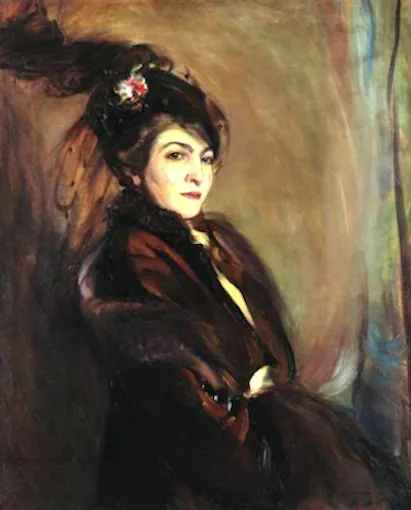
Mary Shepard Greene was born on September 26th, 1869 to Rufus Greene Jr. and Isabel Shepard Greene in Brooklyn, New York. Her father was an affluent importer for a private shipping company, facilitating trade between the United States and East African countries like Mozambique and Madagascar. Although Rufus passed away when Mary was only a teenager, he left behind a large inheritance which allowed his widow and only child to continue living in comfort for the rest of their lives. In the 1880s, Mary attended the progressive, coeducational Adelphi Academy—a preparatory school that would later become Adelphi University. She went on to become one of the first graduates of the newly founded Pratt Institute, where she studied under the prominent sculptor Herbert Adams. In 1899, her portrait of Charles Pratt, the school’s founder, was featured at the graduation ceremonies—marking the debut of her portrait work (New-York Tribune, June 23, 1899, 11). In July 1901, Herbert Adams' bronze bas-relief portrait of Mary was first shown in 1894 at the loan exhibition of the National Academy of Design (#1, lent by Greene), it was also shown in 1901 at the Summer exhibition of art in the Maine State Building at Poland Springs, Maine.
Mary's sensitive, academic paintings of important persons, cityscapes, and allegories earned high praise from the artistic community in her day. A letter from a New York Herald reader published on June 18th, 1902 named her one of the six “best American women painters resident abroad” (Porter, “Letters from Herald Readers”). Yet, according to Marcy Botwick, a librarian at the University of New Mexico who compiled a biographical sketch of Mary, her contributions to the art world have remained "relatively unexplored." Botwick’s account, however, provides little insight into Mary’s formative years in Paris—an influential period that laid the foundation for much of her personal life and artistic career. Importantly, Artist Helen Blumenschein, Mary's daughter, also wrote a comprehensive memoir of her family life under the title of Recuerdos: Early Days of the Blumenschein Family (1979).
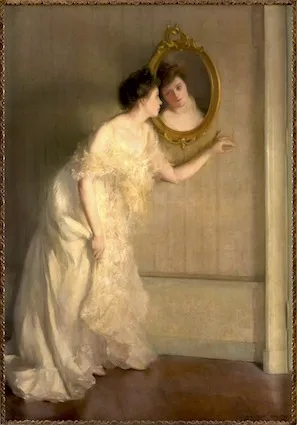
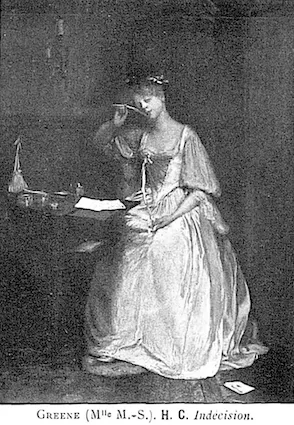
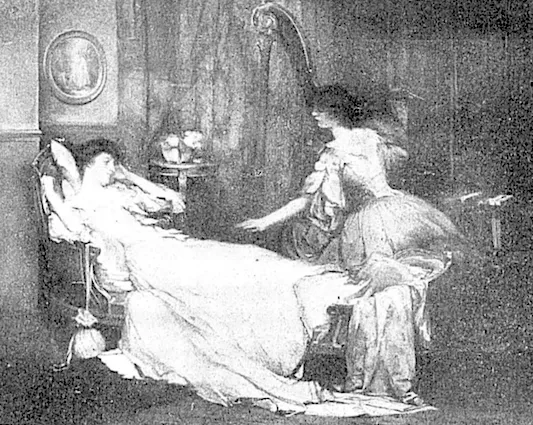
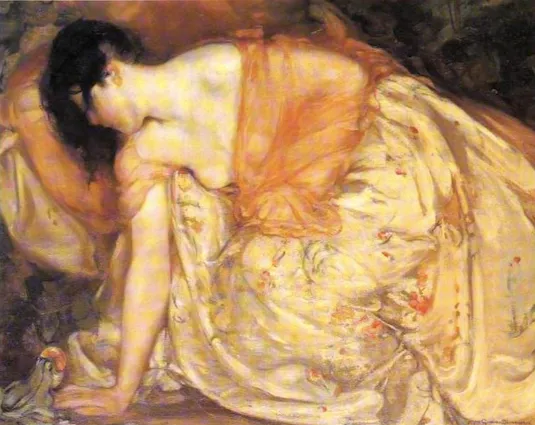
In 1892, Mary and her mother moved to Paris, where they lived at 23 (sometimes identified as 19) rue Le Verrier, a small street in the Montparnasse neighborhood within walking distance of the Académie Colarossi, where she studied under famed French painter Raphaël Collin. She then began exhibiting regularly with the Salon des Artistes Français (SAF catalogues available at Gallica.bnf.fr):
- 1896: Constantia (SAF #945), Paysanne hollandaise (#946), and Le livre vert (#2548)
- 1900: Un regard fugitif (A Passing Glance), photograph on p. 248 of the SAF catalogue. By all accounts, the painting received an honorable mention at the Salon. It was later exhibited in January 1901 at the Seventh Annual Exhibition of the Pennsylvania Academy of the Fine Arts, where a certain George Eagle Jr. purchased the work.
- 1901: Portrait de Mme D… (SAF #925) and À l’ombre (SAF #926)
- 1902: Une petite histoire (SAF #754). In the United States, the work was first exhibited under the title A Little Story in October–November 1902 at the Art Institute of Chicago. It was subsequently shown at the 72nd Annual Exhibition of the Pennsylvania Academy of the Fine Arts in January 1903 (#128); at the Society of American Artists from March to May 1903; at the Worcester Art Museum from May to October 1903 (#139); and again at the Art Institute of Chicago in October–November 1903. It was later included in the St. Louis World’s Fair from April to December 1904, and at the Carnegie Institute from April to June 1907 (#53).
- 1903: Indécision, photograph on p. 55 of the SAF catalogue. In the U.S., it was shown at the Art Institute of Chicago in October–November 1903, and at the St. Louis World’s Fair from April to December 1904.
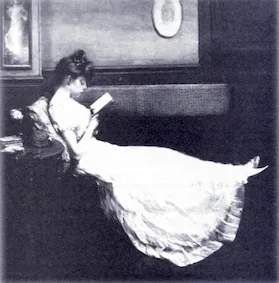
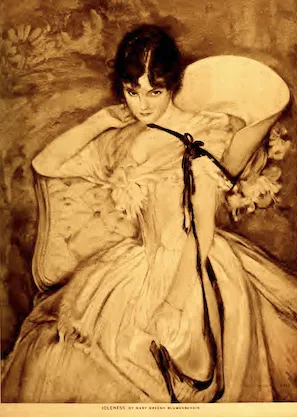
- 1904: Indolence, photograph on p. 2 of the SAF catalogue. Exhibited at the Pennsylvania Academy of the Fine Arts from January to March 1905 (#830).
- 1907: Rose (SAF #737) and La chemise (SAF #738)
- 1908: La toilette (SAF #781) and L’éventail (SAF #782), exhibited under the name Greene-Blumenschein, residing at 246 boulevard Raspail in Montparnasse.
- 1909: La princesse et la grenouille (SAF #816) and La tristesse (SAF #817), also under Greene-Blumenschein, listed as living at 24 boulevard Raspail—though this may be a typographical error.
![Blumenschein, Mary. Portrait of Colonel T. A. D. "Letters from Herald Readers," by Linn Boyd Porter. New York Herald [European Edition], 18 June 1902, p. 3. International Herald Tribune Historical Archive 1887-2013.](/sites/reidhall.globalcenters.columbia.edu/files/styles/cu_crop/public/content/Greene/Mary%20Shepard%20Greene_Portrait%20of%20Colonel%20TAD_1.png.webp?itok=TpP4bYN5 "Blumenschein, Mary. Portrait of Colonel T. A. D. \"Letters from Herald Readers,\" by Linn Boyd Porter. New York Herald [European Edition], 18 June 1902, p. 3. International Herald Tribune Historical Archive 1887-2013.")
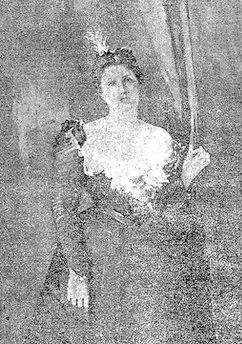
Mary was even awarded a second-place prize at the 1902 Salon des Artistes Français, becoming only the second American woman to receive such an honor from the Société. The first was Elizabeth Jane Gardner Bouguereau, who earned a third-class medal in 1887 for her painting La fille du fermier. Mary also frequented 4 rue de Chevreuse, where she showed her work at the American Woman’s Art Association exhibitions:
- 1901: “two pictures which are not specimens of her best work” Portrait of Mme. D… and À l’ombre.
- 1903: a large three-quarter length portrait of a colonel in the U.S. Army
- 1905: a pastel drawing
In 1903, Mary met illustrator Ernest L. Blumenschein at a gathering of the American Art Association, the male counterpart of the Girls’ Art Club in Paris. He was performing in blackface in an amateur minstrel show, an offensive performance predicated on racist stereotypes of African Americans. Blumenschein was five years Greene’s junior, having arrived in the city the year prior to complete his artistic training. According to the couple’s daughter Helen in her 1979 memoir, it was “love at first sight for the both of them” (Blumenschein, Recuerdos, 17). The pair married on June 29th, 1905 at St. Luke’s Chapel on the property of the Girls’ Art Club (mistakenly identified in some newspaper accounts as situated on Rue Campagne Première). The ceremony, officiated by Reverend Isaac Van Winkle was described as “one of the prettiest weddings the American artist colony has recently seen.” Artists Raphaël Collin and Frederick Carl Frieseke and habituées of the American Women’s Art Association Elizabeth Nourse, Grace Gassette, and Susan Watkins (her bridesmaid together with Helen Sands) were notably in attendance. The couple stayed in Paris for the next four years. Mary gave birth to a son in 1906, named Ethan Allen, who died within two days of his birth. It seems that the couple travelled to Giverny where they stayed between 1906 and 1907 (Bourguignon). They returned to Paris in 1907 and lived on on the bd. Raspail. Both worked in illustration to support themselves (Botwick). On example is Mary's illustration of “The Reprieve,” a short story by May Harris in The American Magazine, volume LXV, no. 2, December 1907, pp. 202 to 211.
Throughout her Parisian sojourn, Mary regularly shipped her artworks to exhibitions in the U.S., thus maintaining an active presence in the American art scene despite living abroad. Articles in the New York press frequently reviewed her work, praising her artistic talent and accomplishments on both sides of the Atlantic and highlighting her growing reputation in both Europe and the United States. In 1904, for example, she won the silver medal at the Louisiana Purchase Exposition, informally known as the St. Louis World's Fair.
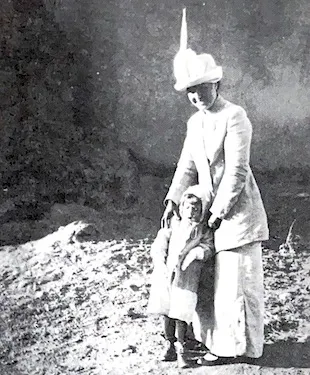
With the birth of their daughter approaching in 1909, the Blumenscheins returned to New York, where their only surviving child, Helen, was born in Brooklyn on November 21, 1909. Mary taught at Pratt for a year.
By 1910, Ernest began spending every summer in Taos, New Mexico, where the rugged landscape deeply inspired his artistic practice. He dreamed of starting an Anglo artist colony in the area and was slowly recruiting friends to join him. In 1912, Ernest helped form the Taos Society of Artists (Botwick). Mary and Helen visited Taos the following year, and the former was immediately dissatisfied with the harsh living conditions. The area was exceedingly remote, lacked a ready supply of groceries, and was subject to dangerous diphtheria outbreaks. Mary and her daughter stayed only one week before returning home (Blumenschein):
Blumenschein’s work did take a toll on his family life. For years, his wife and daughter, Helen, stayed in New York, which offered urban conveniences and a sophisticated social scene that were missing from Taos. When he talked Mary into making a visit, she left immediately upon finding that she would have to care for Helen in the boarding house (Viencek, 190).
According to a brief biographical sketch of Mary’s contributions to the art world, the author writes: “Ernest wrote fond letters throughout their separation, and occasionally offered encouragement, if sometimes in a relatively self-centered manner. He commented on one occasion, ‘you’ve added to the dignity of my name by your good capable artwork’” (Carbone, 315). In truth, the remark is more than merely “relatively self-centered”; it explicitly centers on Ernest’s legacy, casting Mary’s accomplishments as a reflection of his own reputation. Rather than recognizing her as an accomplished artist in her own right, the comment relegates her achievements to a supporting role within his personal narrative. Yet Mary’s career clearly demonstrates her independent and sustained engagement with the art world. While her husband spent increasingly long periods in New Mexico, she continued to build her professional identity in New York—contributing illustrations to books and short stories, and regularly exhibiting her paintings.
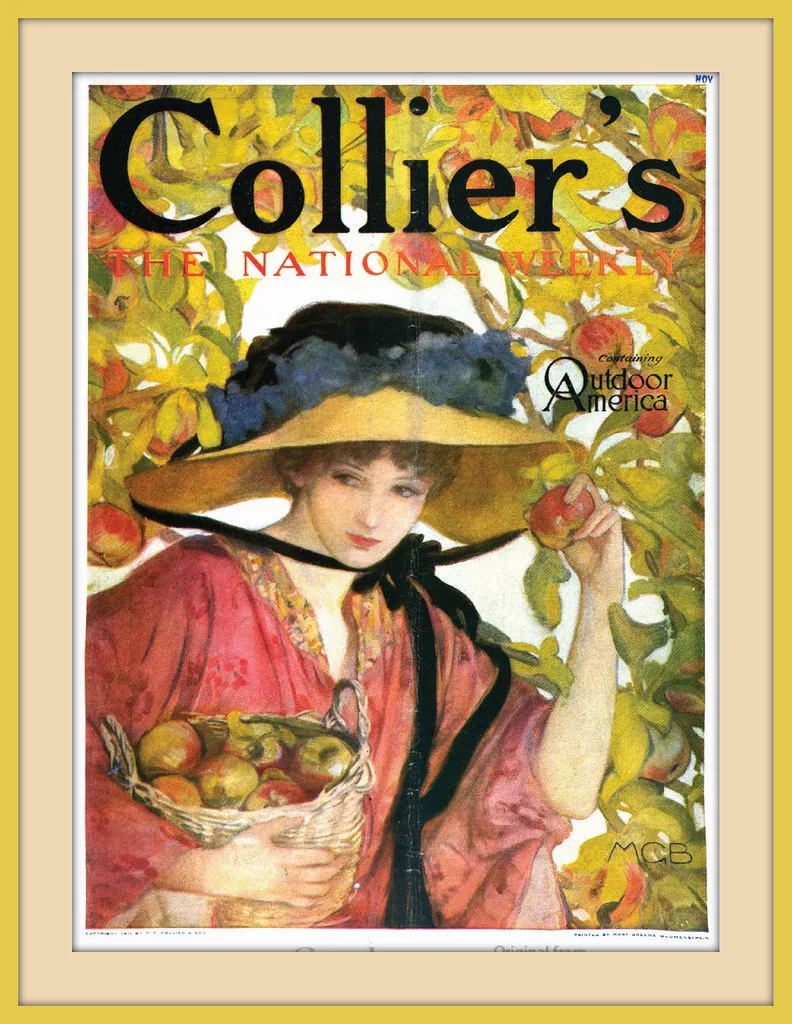
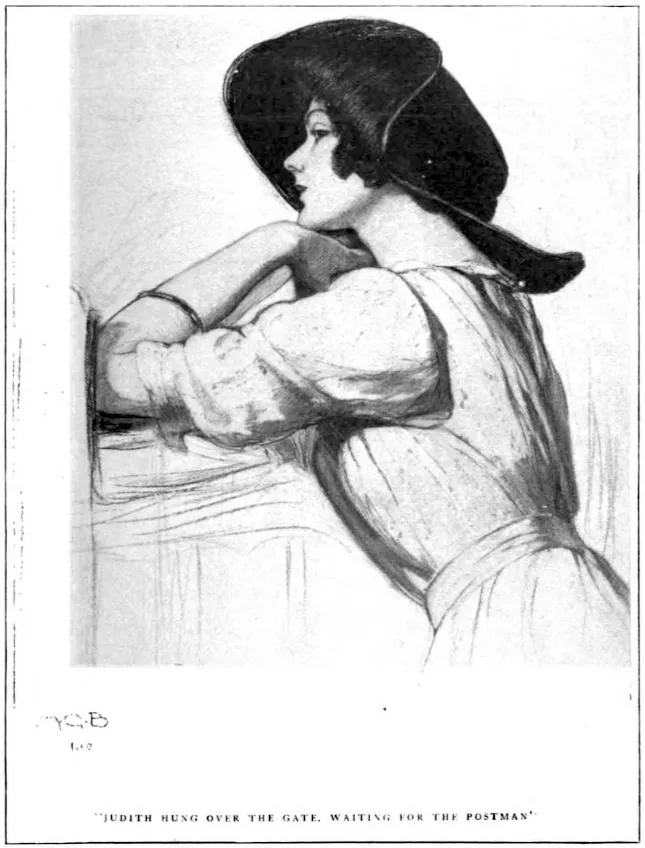
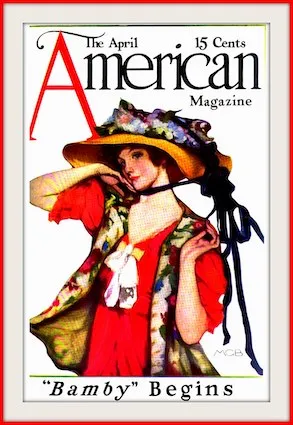
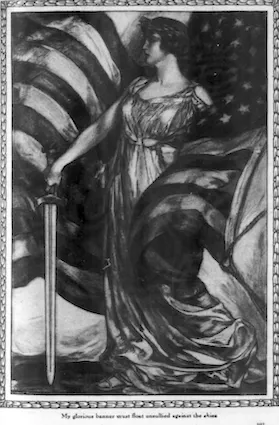
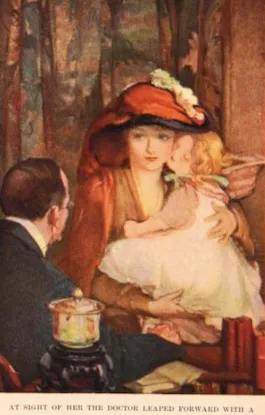
In 1912, she was elected an Associate of the National Academy of Design (Hoeber, n.p.), an honorary title recognizing artists for their significant contributions to American art. On March 1, 1915, she submitted her self-portrait to the Academy as part of the formal diploma presentation required of newly elected Associate National Academicians (ANAs), marking her official induction into the institution. Selected contributions and honors from 1907 to 1919 are listed below (information drawn from Internet Archive under the name of Mary Green Blumenschein):.
1907
- Publication of the “The Reprieve,” a short story by May Harris, illustrated by Mary The American Magazine, volume LXV, no. 2, December 1907, pp. 202 to 211. Internet archive.
1909
- Showed Soap Bubbles at the Philadelphia Art Club, December 1909.
1910
- Showed Sorrow (# 589) and The Princess and the Frog (# 674) at the 105th Annual Exhibition of the Academy of the Fine Arts, January 23 – March 20, 1910.
1911
- Showed two unnamed canvases at the April Women’s Art Club exhibition of New York
- Showed Quay of Quesnay (#1042) at the Ninth Exhibition of Watercolor at the Pennsylvania Academy of the Fine arts, November 13 to December 17, 1911.
- Publication of Susan Glaspell ‘s short story, “According to His Lights,” illustrated by Mary, The American Magazine, Volume LXX11, no. 2, June 1911, pp. 153-162.
- Publication of Neith Boyce’s short story, “The Elder Generation,” illustrated by Mary, The American Magazine, volume LXXI, no. 6, April 1911, pp. 748 to 757. Internet archive
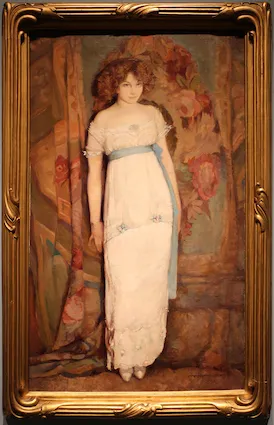
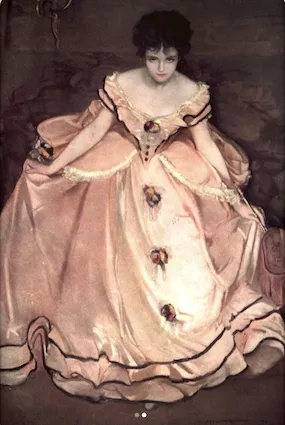
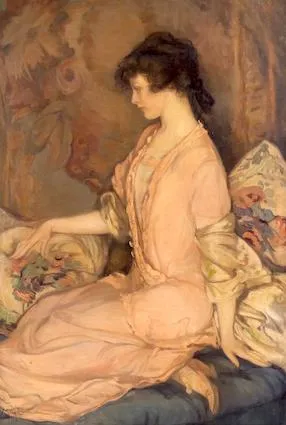
1912
- March-April, showed “Idleness,” at the Annual National Academy of Design exhibition.
1913
- Showed Portrait of Louisa at The Philadelphia watercolor exhibition, February 1913.
- From February to March, she showed The curtsy (# 7) in the Annual Exhibition of the Women’s Art Club of New York.
- October to November, she showed an unidentified drawing at the Fourth Special Exhibition of The Society of Illustrators at the Galleries of the National Art Club, Gramercy Park. Exhibit under the auspices of the American Federation of Arts.
- December—January, showed Valentine and Portrait of Louisa at the fall Academy of Design exhibition.
1914
- Publication of The Right Track Clara Louise Burnham with a frontispiece by Mary in color, Houghton Mifflin.
- Publication of Marjorie George Benton’s, Bambi, illustrated by Mary, Doubleday & Co. The book had a resounding success, selling over 20,000 copies in just a few months and was re-edited at least three times.
- In 1914 Ernest and Mary moved into a studio apartment in the Sherwood at 58 W. 57th St. in New York City (American Art News, May 16, 1914, vol. 12, no 32, 1914, p.3. Internet archive).
- Mary became a member of the American artist committee for the relief of the families of French artists, soldiers, of which there were now 90 members (New York Times, October 17 October 31, 1914, p. 11. Internet archive).
- Showed the portrait of Sophie Kerr at the Winter Exhibition of the National Academy of Design (Vogue Magazine, February 1, 1914, p. 86. Internet Archive).
1915
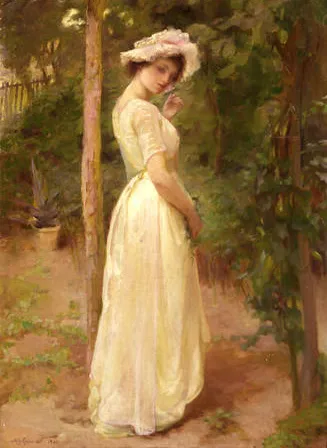
- The Princess and the Frog was awarded the Julia A. Shaw Memorial Prize in the Spring 1915 exhibition of the National Academy of Design.
- Publication of Marjory Benton Cooke’s Dual alliance, Doubleday & Co., illustrated by Mary.
- Between February and December 1915, three of her paintings—The Fan (#2332), Valentine (#4225), and A Girl (#4313)—were exhibited at the Panama-Pacific International Exposition.
1916
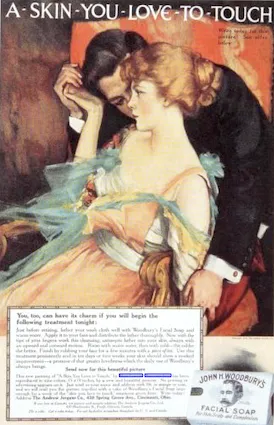
- Illustrated an advertisement in the Ladies Home Journal vol. 33, no. 9, September 1916, p. 58, “A Skin You Love to Touch.” Her painting—without the advertisement—was reproduced in nine colors at a size of 15 by 19 inches and sent, along with a bar of Woodbury’s facial soap, to anyone who submitted a request by mail. Sales of the soap skyrocketed, and the marketing campaign continued well into the 1930s, featuring images by other artists, including photographer Edward Steichen during that decade: Helen Landsdowne created this magazine advertisement as part of a sensual campaign for John H. Woodbury soap, setting the pace for evocative national, brand-name advertising. This full-page ad combines a strikingly intimate romantic scene and headline with two older practices: heavy, black type on white packaging that still carried Woodbury’s portrait as its trademark and an offer of the picture as a premium (Laird, 256).
- Publication of The Real Adventure by Henry Kitchell Webster, illustrated by Mary, The Bobbs-Merrill Co., 1916
- Publication of “Miss Smithy and the Prodigal Son” by Fannie Heaslip Lea, illustrated by Mary, Everybody’s Magazine, 1916, vol. 34, no. 4, pp. 467-477.
- Publication of the poem “America” by Ella Wheeler Wilcox, illustrated by Mary, Good Housekeeping, 1916, vol 62, no. 6, pp. 690-691
1917
- Publication of The Road to Understanding, by Eleanor H Porter, illustrated by Mary, Houghton Mifflin Co, 1917. Internet Archive.
- Amid her professional achievements, Mary faced personal loss: her mother died of pneumonia on March 22, 1917.
1918
- The painting entitled the Princess and the Frog was gifted by the Brooklyn Women’s Club in memory of Mrs. Mary I. Greene (Mary’s mother) to the Brooklyn Museum.
1919
- March – April, Mary showed A Lady with a Harp at the 94th annual exhibition of the national Academy of Design.
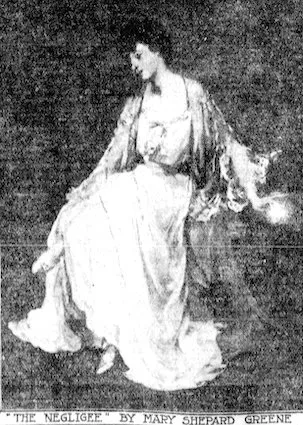
Although Mary attempted to eschew traditional gender roles in her own life, her representations of women—both in her paintings and illustrations—frequently reflected idealized notions of femininity rooted in early 20th-century social norms. Her female subjects were typically portrayed as beautiful, fashionably dressed, and passive or idle, emphasizing appearance and leisure over agency, intellect, or individuality.
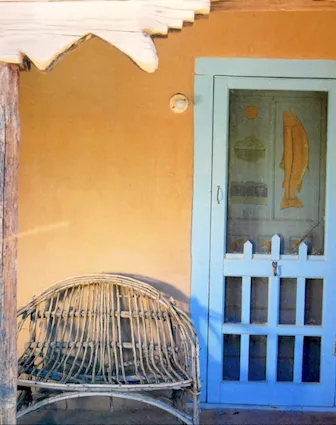
In January of 1919, Ernest Blumenschein officially moved to Albuquerque, New Mexico. That summer, Mary and her daughter joined him in New Mexico for a camping trip, and Mary was finally swayed to join her husband out west (Botwick). She “[...] sold a brownstone in Brooklyn that she had inherited from her parents and bought [painter Herbert] Buck Dunton’s four rooms in the old adobe” (Viencek, 190). Over time, “As adjacent occupants died or moved out, the Blumenscheins expanded their residence by knocking a hole in a wall to make a doorway, until they eventually had 12 rooms, plus a screened-in room on the roof, where Helen could sleep outside in the summer” (Viencek, 190-191).
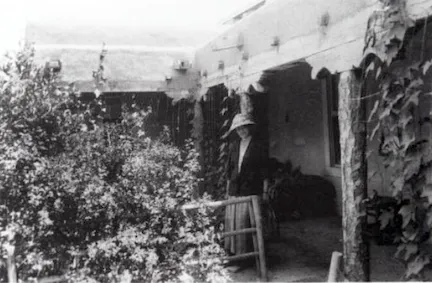
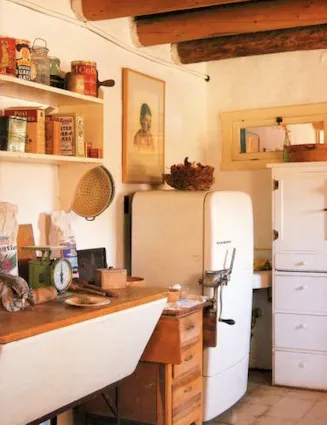
In the early 1920’s, Mary gave up her career as a painter: “Taking care of her younger daughter, took time away from her painting, but it was also said that she gave up painting because her husband could not stand having two painters in the house” (Viencek, 193).
A recent biographer noted that “Blumenschein had proven himself to be a dominating chauvinist who wanted a wife to be housewife, mother, and caretaker of the family home while he went around the country painting. This would not have been a problem had he encouraged her to have her own career, but he did not, and she subjugated her interests to his (cited in d'Emilio, p. 158).
An excerpt from a letter written by Ernest to Mary, shared by Marcy Botwick at a public conference at the University of New Mexico, underscores the gendered expectations Mary continued to navigate even as she pursued professional opportunities:
Why don’t you come home for a month after you get this Academy picture off –& then go back again. . . I should be so glad to see you and Helen would almost bust with joy! ... I am sorry you are not here to help enjoy things too …. to help wipe dishes –as Helen does, to set the table & make the bed.
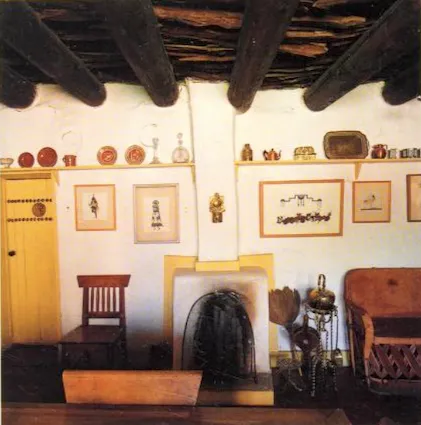
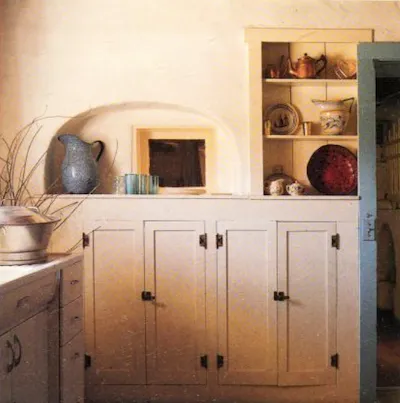
Renovating the Blumenschein's adobe home became Mary’s new passion, and during the process, she unearthed a talent for design (Blumenschein, 18). She transformed her home with new roofs, windows, and furniture:
In the memoir of her family‘s life in Taos, Helen Blumenschein described how her mother “did a beautiful job of keeping the original simplicity and form of the rooms.” She added windows that were horizontal rather than vertical, which was the traditional form, but she kept the Indian fireplaces and Spanish woodwork. She put up shelves to display ceramics and hung Japanese prints in the library and southwest Indian watercolor in the white washed dining room. Under Mary’s direction, a local craftsman painted the walls of the library with a hand- mixed Venetian red color. Mary self painted some decorative motifs on the wall and designed a piece of furniture that was made for her by an Indian carpenter. She mingled locally made furniture with furniture she and her husband had bought in France when they were art students (Viencek, 192).
Although the family lived in a remote area, they frequently traveled to New York to attend art exhibitions and theater performances. From 1922 to 1929, Mary and her daughter Helen spent winters in Brooklyn to support Helen’s education (Botwick). During this period, Mary also began exploring new artistic media. Between 1922 and 1924, she took a jewelry-making course at Pratt Institute, which sparked a lifelong interest in the craft (Blumenschein, 19).
After Helen graduated from the Packer Collegiate Institute in 1928, she and Mary briefly returned to Taos—at a moment “when the Taos art colony was entering its heyday” (Viencek, 193). Helen decided not to pursue college, choosing instead to follow in her parents’ footsteps and study painting in Paris.
From December 1929 to April 1931, Mary and Helen lived in Paris, where Helen took classes at the Académie Julian (Botwick) and worked with modenits painter André Lhote. Reflecting on that time, Helen noted that she learned primarily from museums, as World War I had “literally bled France of all her talented young men” (Blumenschein, 5). Inspired by her daughter’s experiences, Mary also returned to drawing and painting during their stay. Financial constraints eventually forced them to return to Taos in 1931 (Botwick).
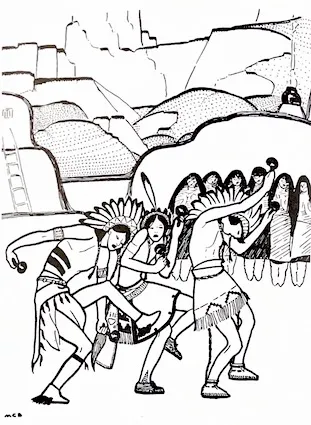
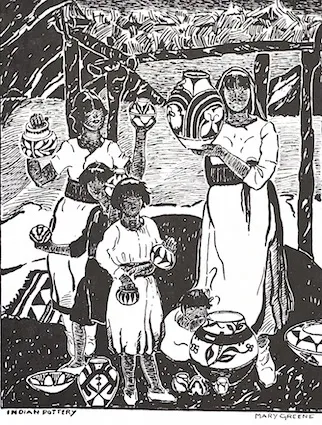
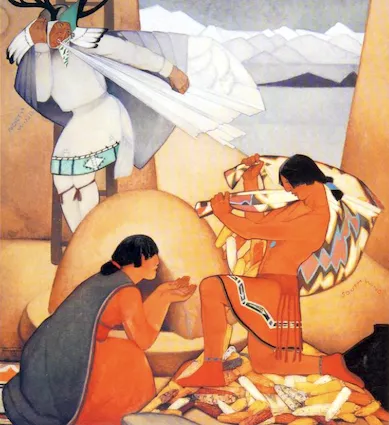
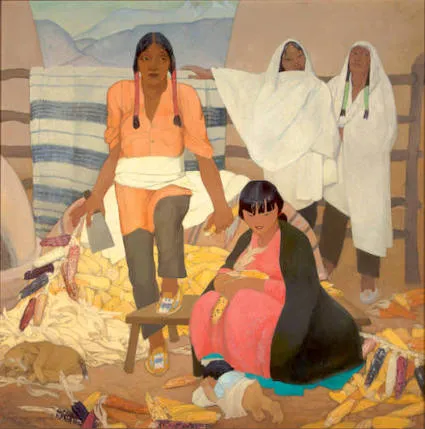
Upon their return, Mary occupied herself with her many practices: she continued to renovate the house, made jewelry, and painted once again. The family continued to travel to New York every spring to take advantage of the city’s many resources. On one of these trips, Mary took a class at the Art Students League on silk screen and lithography which she incorporated into her already expansive wheelhouse of artistic mediums (Blumenschein).
In August, 1934 she was awarded an honorable mention for her work Acoma Legend shown at the 40th annual exhibition of Colorado artists held at Chapel house of the Denver art Museum. In 1939 she showed an unspecified work at the contemporary art exhibition of the New York World Fair. In 1939 she showed a work at the contemporary art exhibition in the beautiful gallery on the grounds of the New York world’s fair.
During this period, Mary’s paintings centered on members of the Native American community and their daily activities, often depicting ceremonial scenes, traditional dress, and communal life. While these works aimed to celebrate Indigenous cultures, they were shaped by the aesthetic and cultural expectations of non-Native audiences. Like many artists associated with the Taos Society, Mary’s representations frequently relied on idealized, static images that echoed prevailing stereotypes and romanticized notions of the 'noble savage,' ultimately reinforcing a sense of cultural othering and distancing Native Americans from their contemporary realities.
During World War II, the Blumenscheins briefly relocated to Albuquerque, where Mary pursued an illustration commission that ultimately did not come to fruition. Documentation from this period is limited, and little else has surfaced regarding her artistic output during these years. The war and its aftermath likely disrupted the regional art market and may have contributed to a decline in available opportunities, particularly for women artists. As a result, Mary’s visibility as an illustrator and painter appears to have diminished during this decade.
By 1950, Mary had developed a coronary thrombosis which forced her to slow down her artistic production (Blumenschein, 28). In 1958, Mary Greene Blumenschein passed away. In an obituary published in the local Taos newspaper, Spud Johnson remembered Mary:
Thinking affectionately of Mary Blumenschein last Saturday at the memorial service in her honor, I was trying to decide what the quality was which endeared her to me, even though I saw her so seldom and could not claim to have been an intimate. I finally decided it had been her self-containedness which intrigued me most: that strong impression she gave of feeling and knowing, without the necessity, apparently, of expressing, or even speaking except in the gentlest of voices. I cannot remember that she ever said anything profound or brilliant or clever, and yet I always had the feeling that she knew, understood, sympathized and was wise. This quality of understatement, reserve and containedness is exceedingly rare. I have encountered it in very few people, and can only describe it as a certain kind of presence and awareness that was infinitely consoling and impressive without a gesture being made or a word spoken. Some element of this unusual attribute was a secret Mary Blumenschein undoubtedly possessed, and it will be a long time before any of us come under such a spell again (Blumenschein, 31-32).
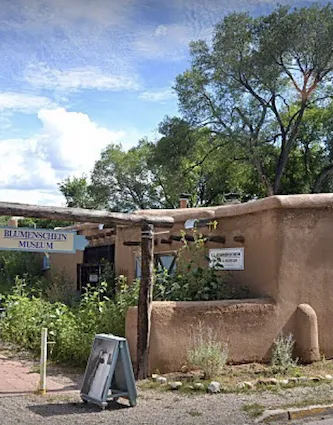
Helen Greene Blumenschein gave the house to the Kit Carson Foundation in 1962. Now owned by Taos Historic Museums, this house museum has been returned to its state in the 1930s and was was registered as a National Historic Landmark in 1966 (“E.L. Blumenschein Home and Museum and La Hacienda De Los Martinez,” Taos Historic Museums). Today, the building serves as a museum to celebrate both the three artists in the Blumenschein family as well as the Taos Society of Artists as a whole. Works by Mary Blumenschein are held by the Brooklyn Museum, the New Mexico Museum of Art, and the Harwood Museum of Art among others.